Chinese


Child protection and innovation: SZE hosts interdisciplinary conference
A recent conference organised by the Institute for Media Studies of the National Media and Infocommunications Authority and Széchenyi István University focused on the links between child protection and innovation, as well as the impact of technological, social and institutional changes on young people. The programme brought together representatives from health and sport sciences, psychology, education, sociology, law and media studies.
Széchenyi István University's Győr Innovation Park recently hosted the conference entitled Child Protection and Innovation, jointly organised by the University's Centre for AI and Future Strategies and the Institute for Media Studies of the National Media and Infocommunications Authority (NMHH). The forum explored how new technologies and social and institutional changes affect the lives of children and young people.
Professor Dr Eszter Lukács, Vice President for International and Strategic Relations at the University, explained that more than 220,000 primary and secondary school pupils attend school in the six counties of the Northern Transdanubian region, and that the institution therefore considers it a natural responsibility to engage with young people even before they enter higher education. Initiatives serving this purpose include children’s university programmes, open days for secondary school students, campus and laboratory visits, activities organised by the University Library and Archives, career guidance programmes launched in cooperation with Mobilis, Chinese language courses offered by the University's Confucius Institute, and the "Jogtudatosan" legal literacy lecture series for prospective university students. "These initiatives differ in their subjects and methods, but they are united by the same principle: as a university, we feel a responsibility towards future generations," she said. She added that child protection is also an integral part of this social responsibility, as social media, online platforms and artificial intelligence have created situations that previous generations did not have to face.
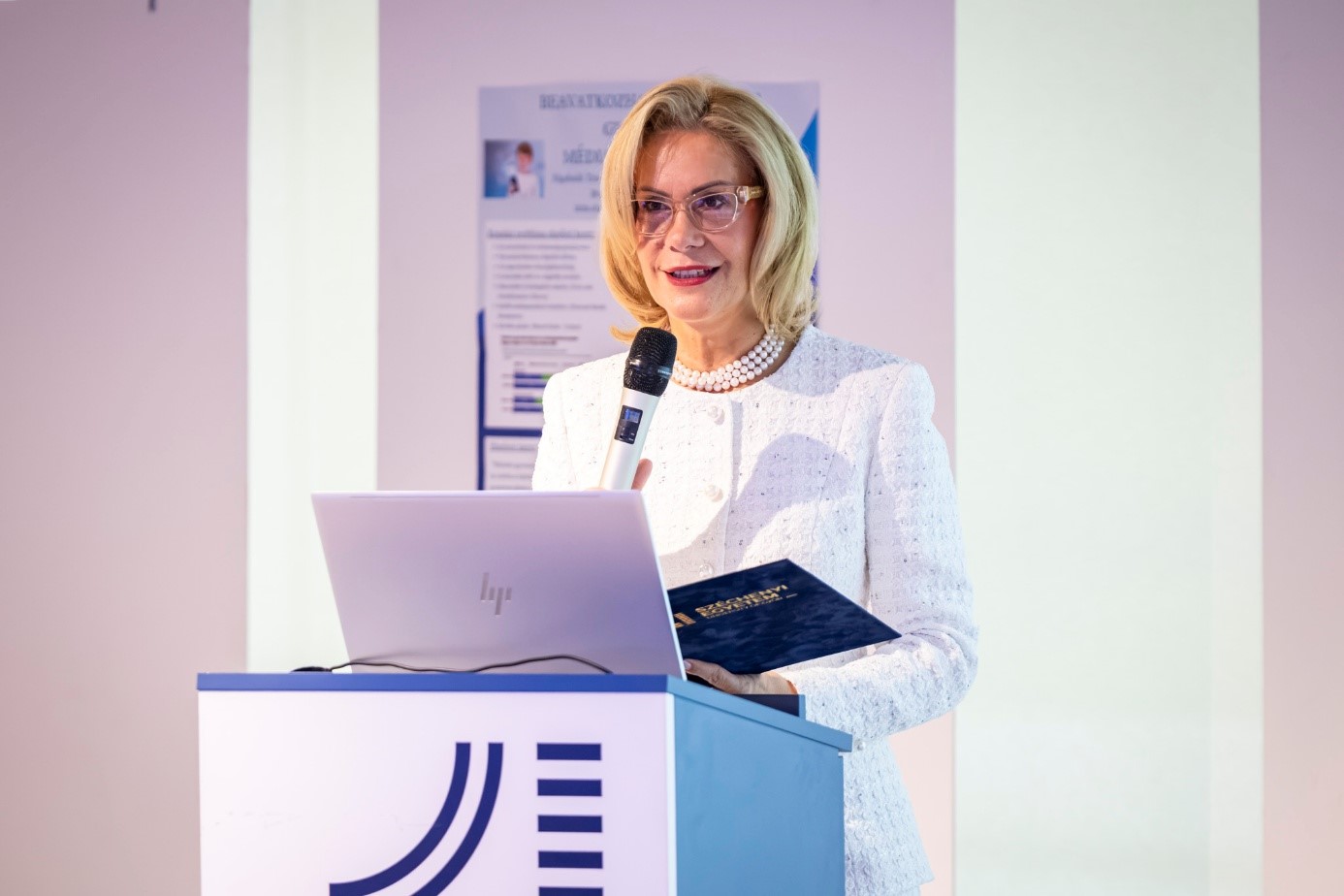
Professor Dr Eszter Lukács, Vice President for International and Strategic Relations at Széchenyi István University, emphasised the institution's responsibility towards younger generations. (Photo: Máté Dudás)
Dr Levente Nyakas, Head of the Institute for Media Studies at the NMHH (National Media and Infocommunications Authority), recalled that the annual conference series on child protection was launched in 2022. The event in Győr was the fifth in the series and the largest to date in terms of the number of presentations, bringing together perspectives from law, communication, health and sport sciences, and education. The underlying principle of the series is that children's media use can only be properly understood by drawing on findings from several academic disciplines. "We are building a professional forum that connects scientific research with experience gained in education and regulatory practice," he emphasised. He added that the NMHH also promotes children's safe use of media through its Bűvösvölgy Media Literacy Education Centres, the Internet Hotline, which helps address online abuse, and publications for parents and teachers.
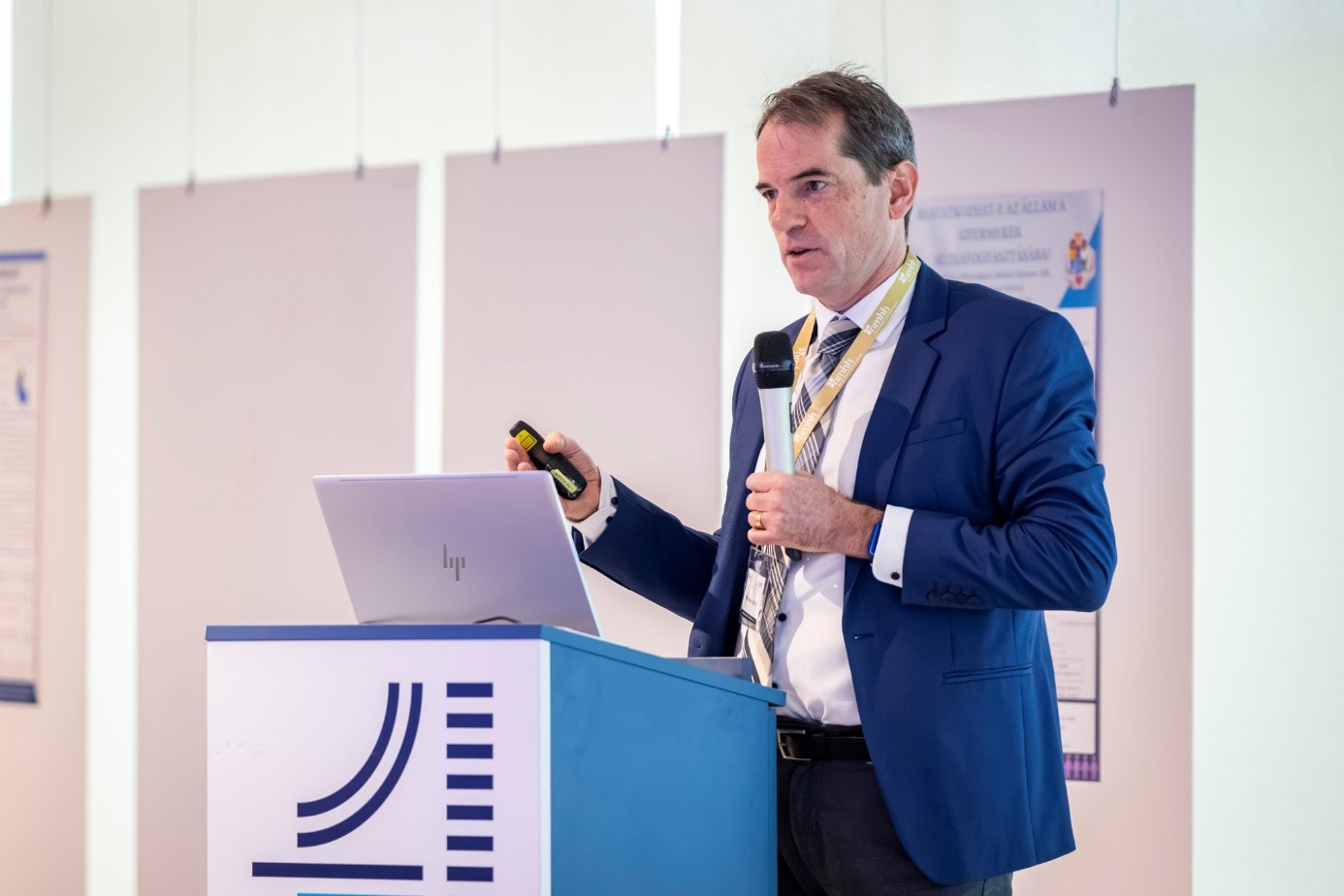
Dr Levente Nyakas, Head of the Institute for Media Studies at the NMHH, delivered a plenary presentation on regulatory issues surrounding young people's access to social media. (Photo: Máté Dudás)
Professor Dr Petra Aczél, Head of the University's Centre for AI and Future Strategies, opened the series of plenary presentations. In her view, we are living through a period of profound change in which media technologies are fundamentally transforming everyday life, with particularly significant consequences for young people. She highlighted that the distinctive feature of the Győr conference was its combination of scientific findings, innovations and practical developments. Participants also had the opportunity to meet representatives of companies and initiatives developing solutions to support children, parents and teachers. She added that bringing together businesses, researchers and university experts could help ensure that practical innovations are put into use as quickly as possible.
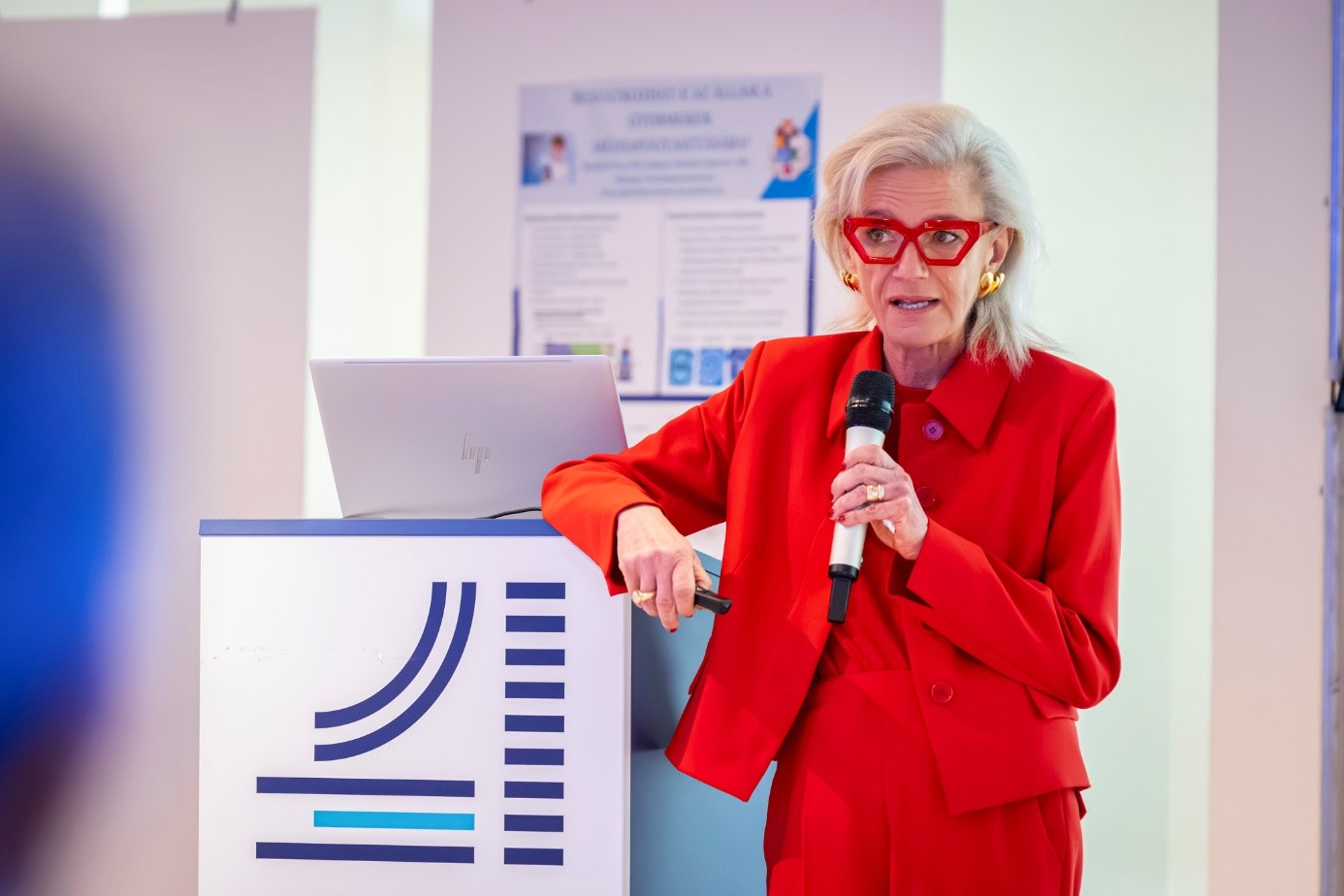
Professor Dr Petra Aczél, Head of the University's Centre for AI and Future Strategies, highlighted the importance of collective action. (Photo: Máté Dudás)
The programme continued with presentations by Dr Ágnes Veszelszki, a linguist and communication researcher, on the effects of chatbots on language use; Dr Levente Nyakas on regulatory issues concerning young people's access to social media; and Professor Attila Szabó, a research professor at Széchenyi István University who ranks among the world's top two per cent of most-cited researchers according to the Stanford University–Elsevier database, on the potential neuropsychophysiological consequences of artificial intelligence use for the developing brain. During the day, Dr Adrienn Németh, a specialist in child and adolescent psychiatry and psychotherapy, explored the links between mobbing, bullying, anxiety, depression and suicide in adolescence. Dr Erzsébet Stephens-Sarlós, a researcher at the University's Faculty of Health and Sport Sciences, discussed the relationship between primitive reflexes and screen exposure.
Dr Árpád Varga, Head of the Media Literacy Department at the NMHH, focused his presentation on age verification for children and the European Union's proposed regulation on Keeping Internet Digital Spaces Accountable and Trustworthy (EU KIDS Act). The presentation specifically addressed parental competencies, the proposal's media literacy provisions and the child rights dilemmas associated with age verification. The expert outlined findings from the NMHH's research on digital parenting concerning parental strategies, demonstrating the need to address age-related challenges. In conclusion, he emphasised the need for a rational regulatory framework and appropriate educational strategies to support children's safe participation in social media.
The conference also featured a roundtable discussion on the challenges posed by artificial intelligence. Alongside Dr Árpád Varga, the participants included Dr Zsolt Ződi, a research professor at the University of Public Service, and György Olivér Marchall, an expert at the National Cyber Security Centre. The discussion covered the impact of AI on children, the risks associated with excessive use and the question of how the technology could be regulated in the future.
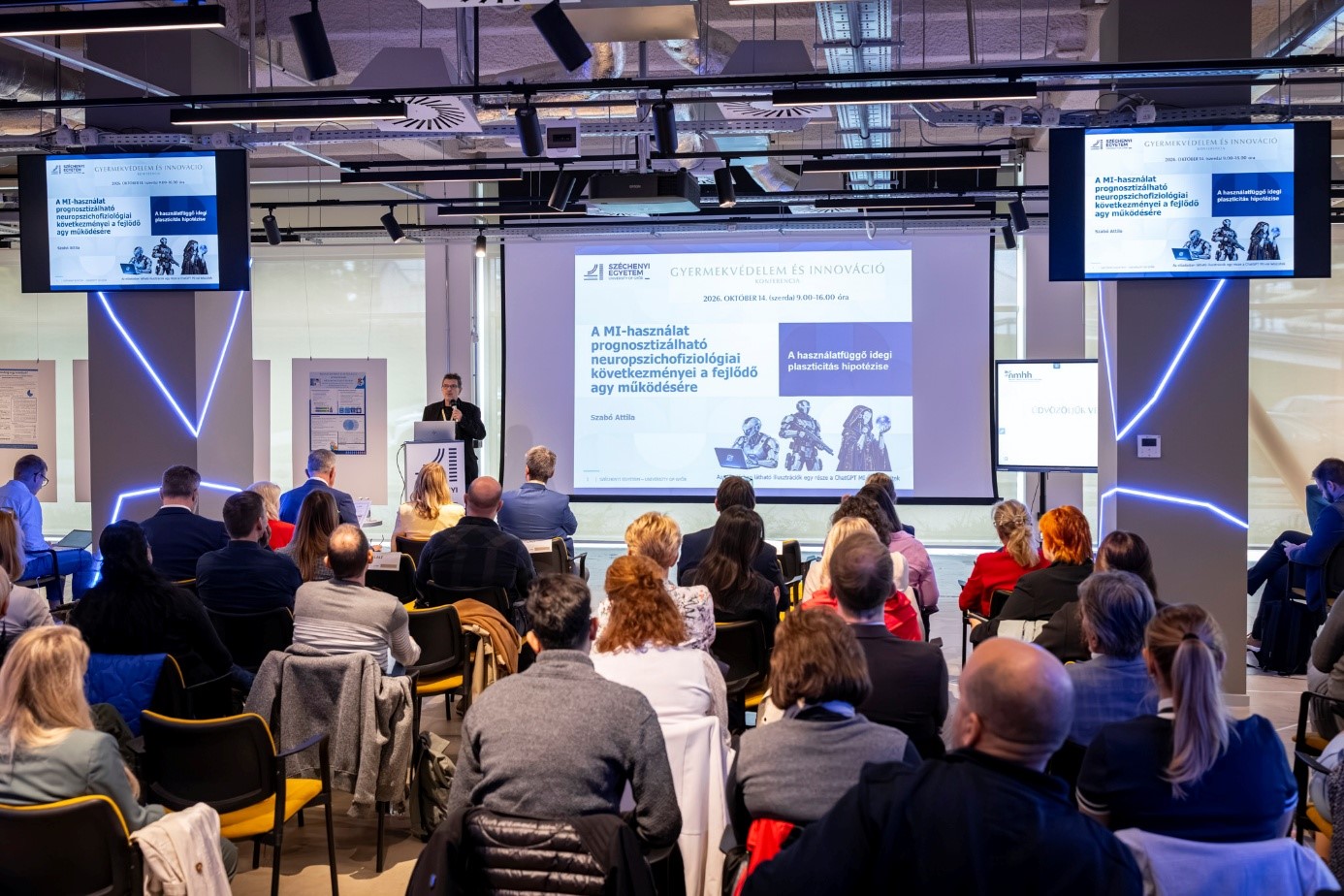
Professor Dr Attila Szabó, a research professor at Széchenyi István University, delivered a presentation on the potential neuropsychophysiological consequences of artificial intelligence use for the developing brain. (Photo: Máté Dudás)
Other topics covered during the programme included digital inclusion, media literacy, conflict resolution in schools and child protection issues in sport. In addition to the academic presentations, the programme featured poster presentations by doctoral students and demonstrations of practical innovations. These included the Look At Me alert system, designed to facilitate accessible communication for people with hearing impairments, as well as several creations by the University's design students.