 Chinese


Innovations to Reduce Carbon Emissions: SZE Develops Applications and a Freight Optimisation System
With the support of the Ministry of Energy, Széchenyi István University is implementing a comprehensive programme centred on the development of an artificial intelligence-based freight optimisation system aimed at reducing carbon emissions in transport. The testing of the project’s results is carried out in industrial partnerships – including with major logistics companies – while the newly established laboratories and equipment at the institution provide the research and testing background.
Széchenyi István University places strong emphasis on contributing to sustainability, which holds a prominent position within its education and research portfolio. This is also reflected in the present project, whose objective is to reduce the environmental impact of transport by building on digital and autonomous technologies.
“We are implementing the reduction of carbon emissions along several interrelated development pillars. A transport and environmental monitoring platform supported by modern infocommunication tools ensures the collection of air quality and transport data. This serves as the basis for the artificial intelligence-based freight optimisation platform, which improves the efficiency of logistics processes,” explained Dr Tamás Budai, the project’s professional lead. He added that attention is also given to examining the effects of urban green spaces on air quality and thermal comfort, as well as to raising public awareness. The infrastructure developed at the University provides support for sensor-based data collection, the analyses built upon it, and AI-based developments.
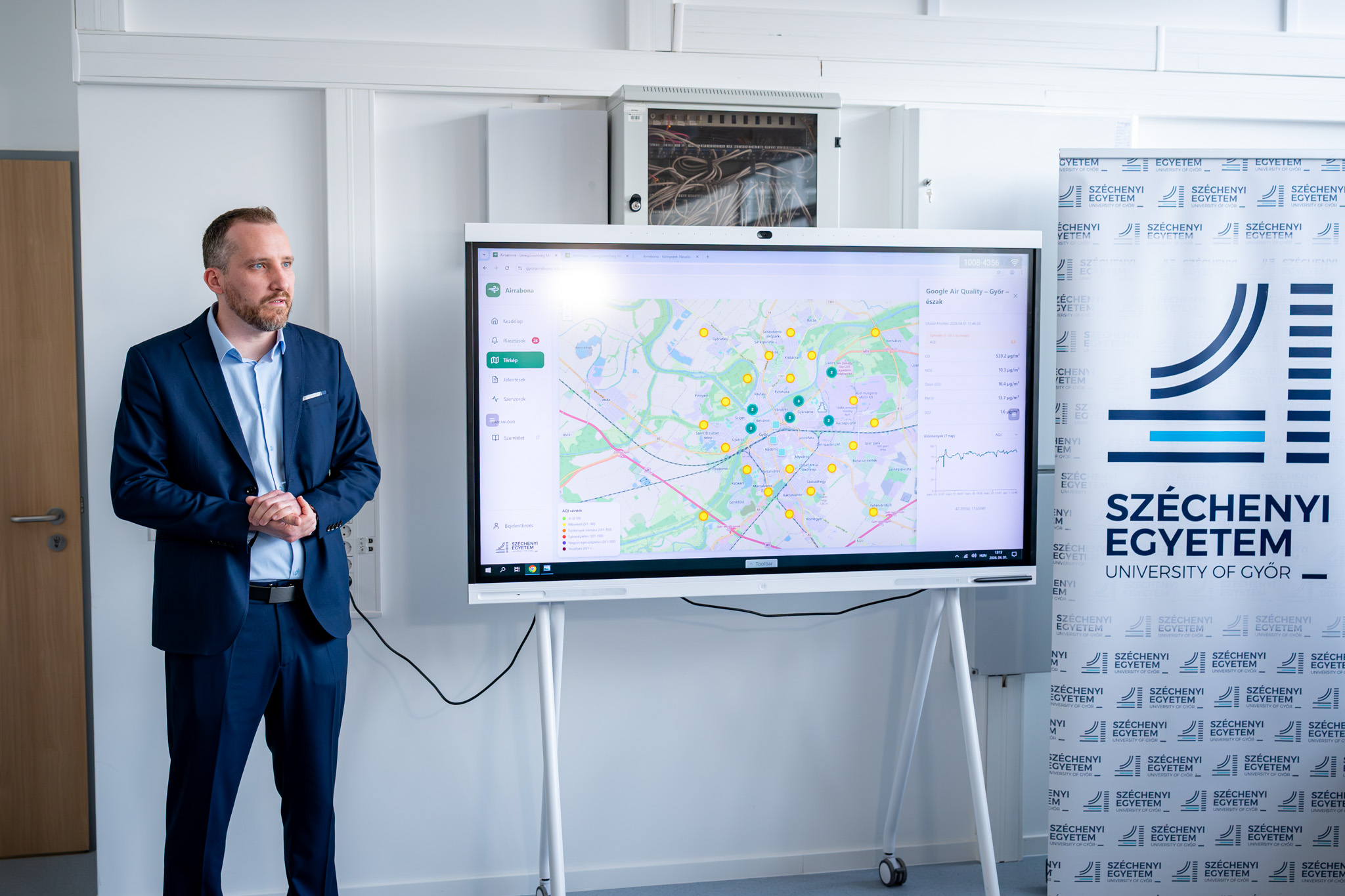
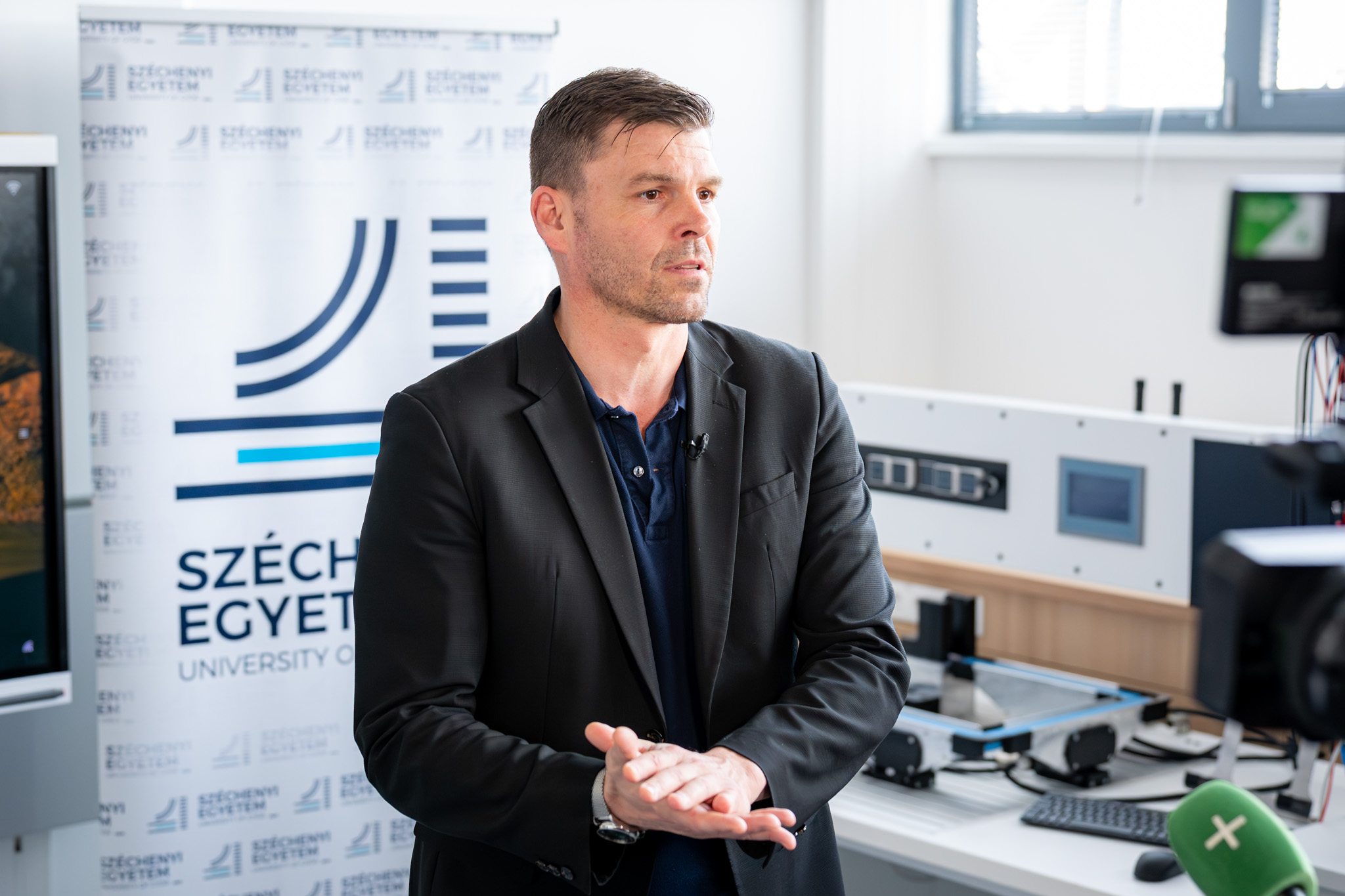
Dr Tamás Budai, professional lead of the project, presented the details of the initiative (Photo: Gábor Marcali)
“Examining sustainability is not only a result of our professional commitment, but also serves to enhance the competitiveness of our university, as the development of cutting-edge technologies and the application of sustainability considerations go hand in hand,” stated Dr Ferenc Friedler, Rector and Vice-President for Scientific Affairs of the Institution. He highlighted that a fundamental task is to prepare students for successful careers, to which, in addition to theoretical and practical knowledge, the University provides another important element: the opportunity to participate in real-life projects.
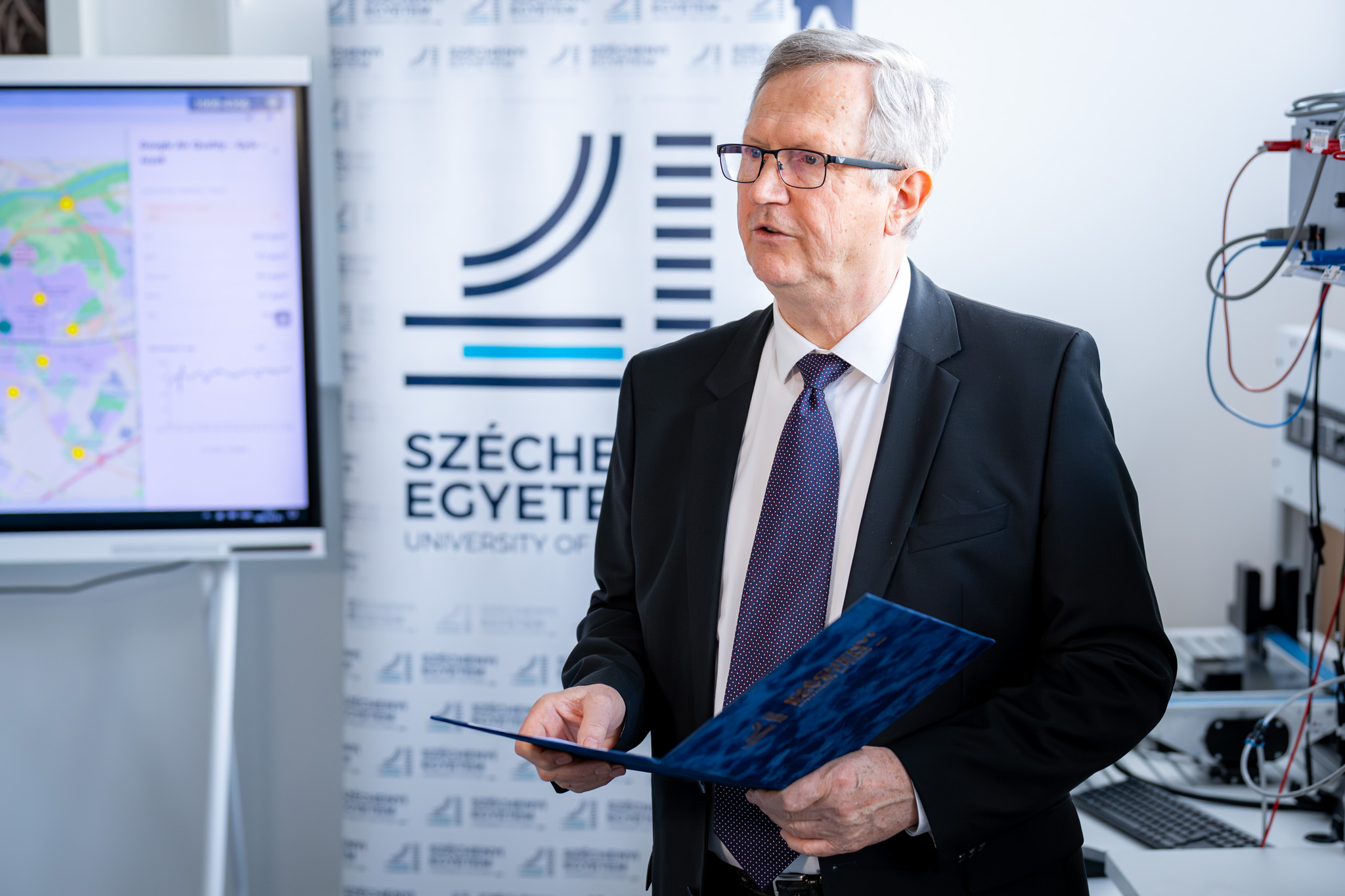
Professor Dr Ferenc Friedler, Rector and Vice-President for Scientific Affairs of Széchenyi István University (Photo: András Adorján)
Dr Gábor Czepek, Deputy Minister of the Ministry of Energy, explained that the current situation is similar to that during the second oil crisis of 1979: following the energy crisis of 2022, another one is already emerging. As a result, he believes the next one and a half to two years will be extremely challenging, particularly for Europe, which has cut itself off from eastern energy sources and tied itself to western ones, while lacking significant internal reserves. He noted that, compared to the United States or China, Europe’s competitiveness is further weakened by carbon quota regulations, which significantly increase costs in the electricity and natural gas sectors. “Instead, the principle of applying more intelligence and fewer regulations should prevail. Projects such as that of Széchenyi István University are justified, as they rely on domestic expertise to reduce carbon emissions, enabling Hungary to escape the trap in which Europe currently finds itself,” he emphasised.
Dr Gábor Czepek, Deputy Minister of the Ministry of Energy (Photo: András Adorján)
Dr Dávid Fekete, Ministerial Commissioner responsible for the liveability and development of Győr and its region, stated that Széchenyi István University plays a key role in making Győr and its surroundings one of the strongest economic centres in Hungary and Central Europe. He said: “Current and future developments will further strengthen this position, for which high-level professional education and cooperation between the University and economic stakeholders are essential.”

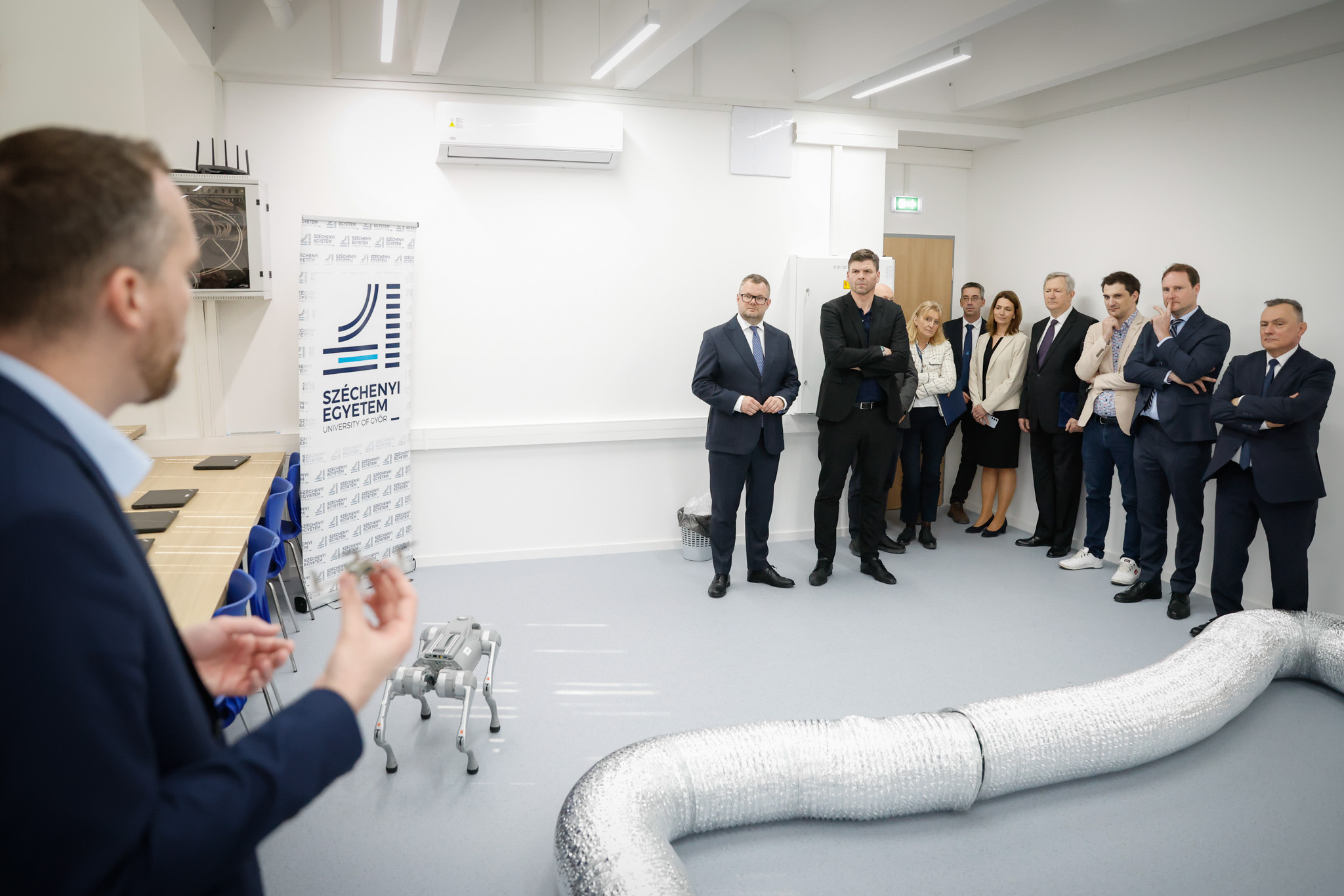
Participants of the presentation visited the laboratories established and refurbished within the framework of the project (Photo: András Adorján)