Chinese


Physical and mental wellbeing take centre stage at SZE's Campus Wellbeing Week
How can we manage everyday stress, what can we do to improve our sleep, and where can we turn if we are struggling with mental health difficulties? These were among the questions addressed during Széchenyi István University's Campus Wellbeing Week. Held for the third time this year, the event featured lectures, workshops and interactive activities highlighting the importance of physical and mental health.
To mark World Mental Health Day, the Alumni and Wellbeing Centre of Széchenyi István University's Directorate of Services and Branding once again organised Campus Wellbeing Week. The four-day event offered students and University staff the opportunity to learn new ways of managing stress and maintaining their emotional wellbeing. The popularity of the programme was reflected in the fact that, as in the previous two years, all workshops and counselling sessions requiring registration were fully booked.
The organisers also encouraged participants to reflect on their experiences and recharge through playful, interactive activities. Visitors could write postcards to their future selves, share their feelings on a stress wall and draw kind, uplifting messages from a box called the Mystery Box of Happiness. Bubble therapy also provided an opportunity to relax and unwind. The SZETOX student group, affiliated with the Students' Union, also helped organise the activities and prepared a self-awareness booklet for participants.
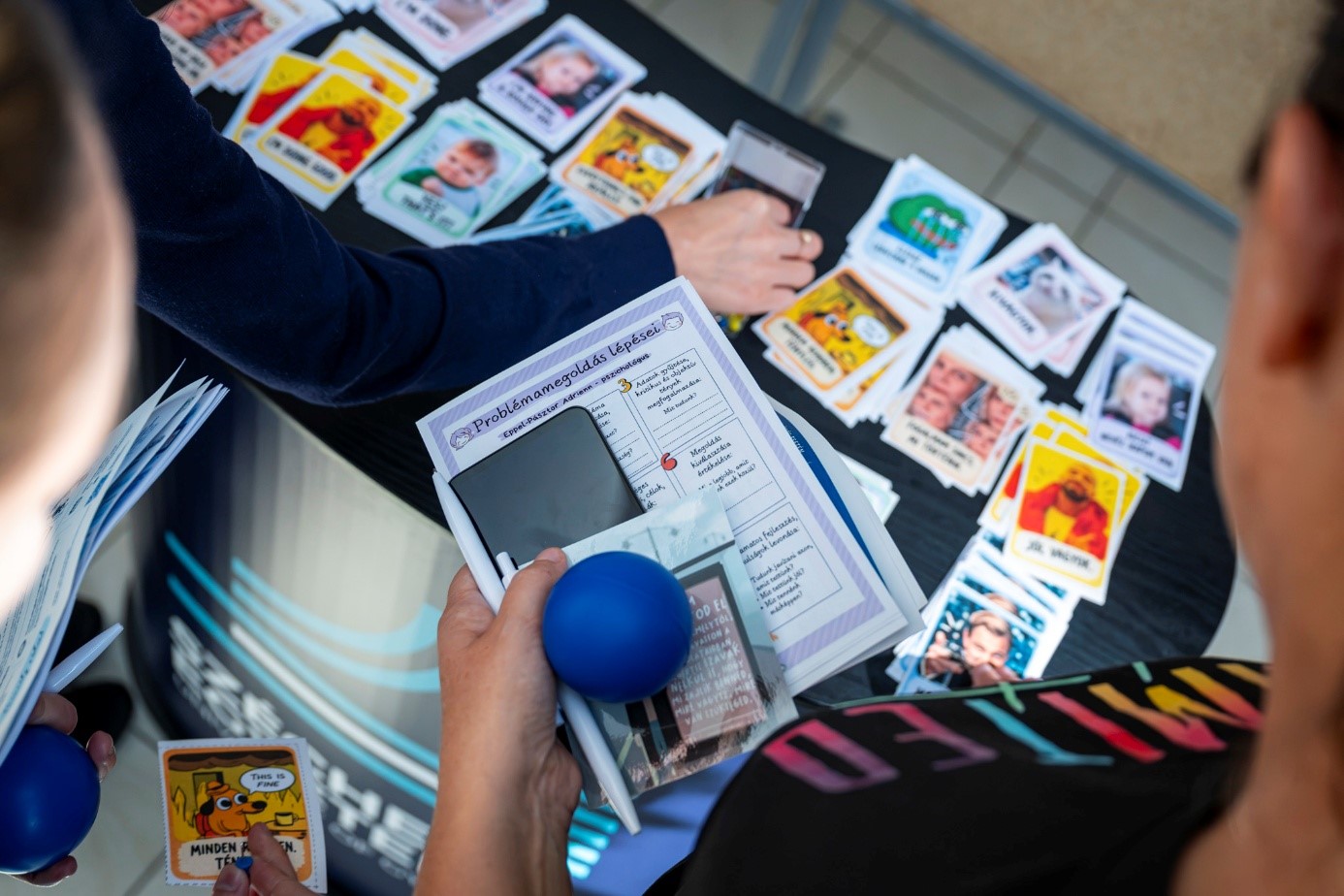
Campus Wellbeing Week used playful activities to promote self-awareness and stress management. (Photo: Máté Dudás)
Alongside stress management and relaxation workshops, visitors could take part in interactive programmes organised by the University-owned UniMedical Center Health and Diagnostic Centre. At the Sleep Lab, participants could assess their sleep quality and receive advice on achieving more restful sleep, while Mental Minutes helped raise awareness through short quizzes, self-help techniques and information about where to seek support. The programme also featured a demonstration by the Mantra Search Dog Association and a lecture by the University's Centre for AI and Future Strategies exploring the relationship between artificial intelligence and mental wellbeing.

The relationship between artificial intelligence and mental wellbeing was also discussed during Campus Wellbeing Week. (Photo: Máté Dudás)
Kornél Farkas, a first-year student on the Bachelor's programme in Vehicle Engineering, also attended the latter lecture and found it useful. “I think it is important that the University pays attention to mental health, as many people find it difficult to admit that they are experiencing such problems, even though these can also affect their academic performance. This makes it particularly important that an entire week was devoted to the subject. What is more, we also learn about stress management as part of our regular coursework,” he said.
Tímea Pusztai, a psychologist at Széchenyi István University, led two stress management workshops attended by both students and staff. “In the first session, we explored how to recognise the signs of stress and what methods we can use to cope with difficult situations. Participants also developed their own coping plans, while the second session focused on simple techniques that can be applied in everyday life,” she explained. The specialist is also involved in the University's counselling services for personal development and mental health. “I have noticed that more and more students are willing to seek help when they encounter difficulties,” she added.
Eszter Májer, Head of the Alumni and Wellbeing Centre, emphasised that the event was primarily intended to provide knowledge that participants could apply in their everyday lives. “We are delighted that Campus Wellbeing Week proved so popular for the third time and that we were also able to reach many international students. Supporting the wellbeing of students at our University is a priority throughout the year. Alongside their professional development, we also pay attention to maintaining their physical and mental health, supporting young people through personal development and mental health counselling, opportunities for sport and community activities,” she emphasised.
PHOTO GALLERY: