 Chinese


Sport, Economy, Sustainability: SZE Promotes Regional Development in Cooperation with Its Partners
This year, the conference entitled "Water We Want" was held for the fourth time at Széchenyi István University. This time, under the motto "New Waves," the event explored Győr's development opportunities related to water from the perspectives of sports, economy, and sustainability. During the evening, the institution and the Hungarian Canoe Federation signed a cooperation agreement related to the organization of the marathon canoe world championships.
On June 26, Széchenyi István University and the Győr-Moson-Sopron County Chamber of Commerce and Industry held the fourth "Water We Want" conference at the Bridge Student and Teacher Club on the banks of the Mosoni-Duna. Launched in 2022, the programme explores the opportunities offered by the city’s and the region’s water resources each year, from various perspectives. This time, the focus was on the triad of sport, economy, and sustainability.
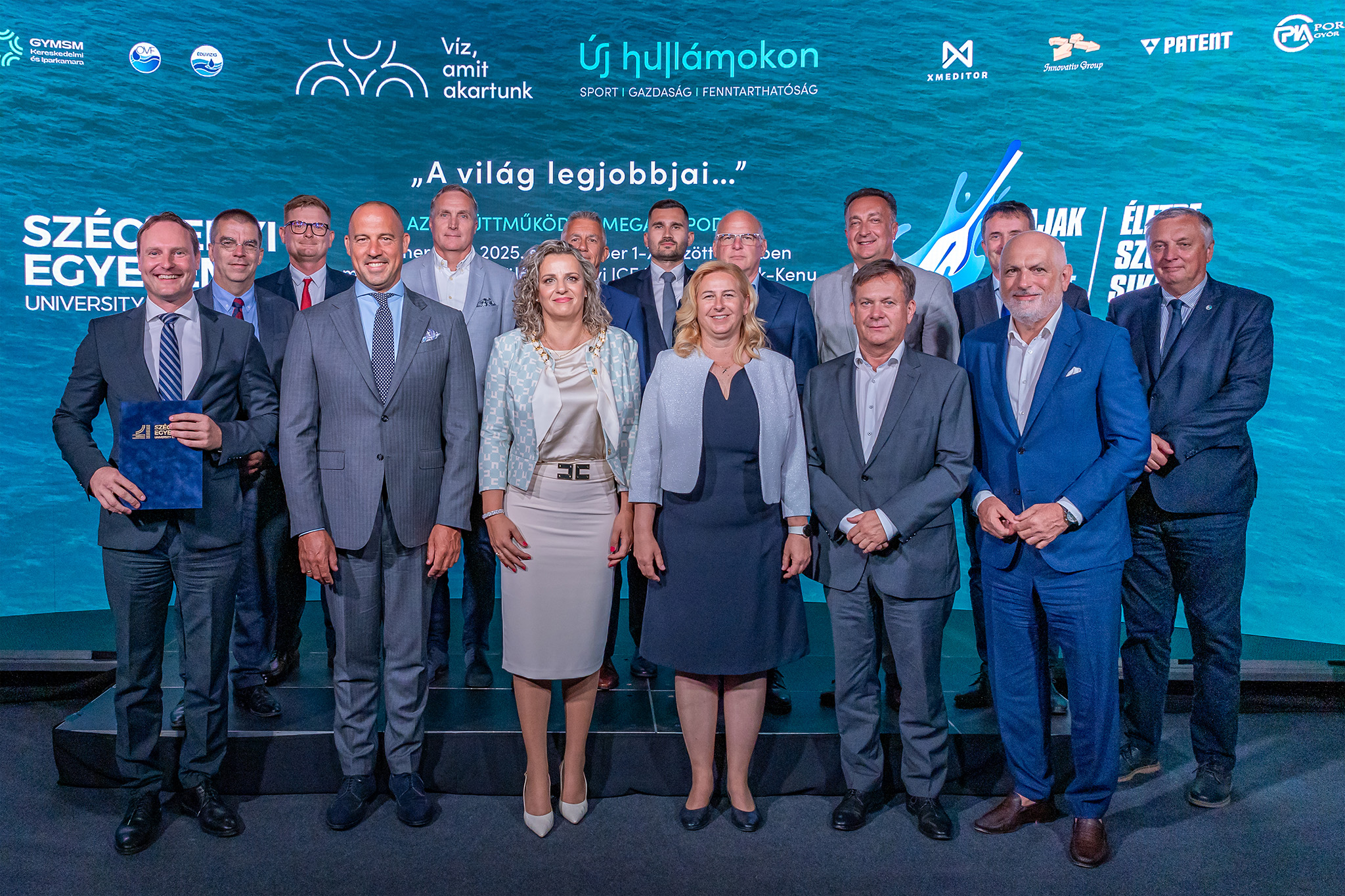
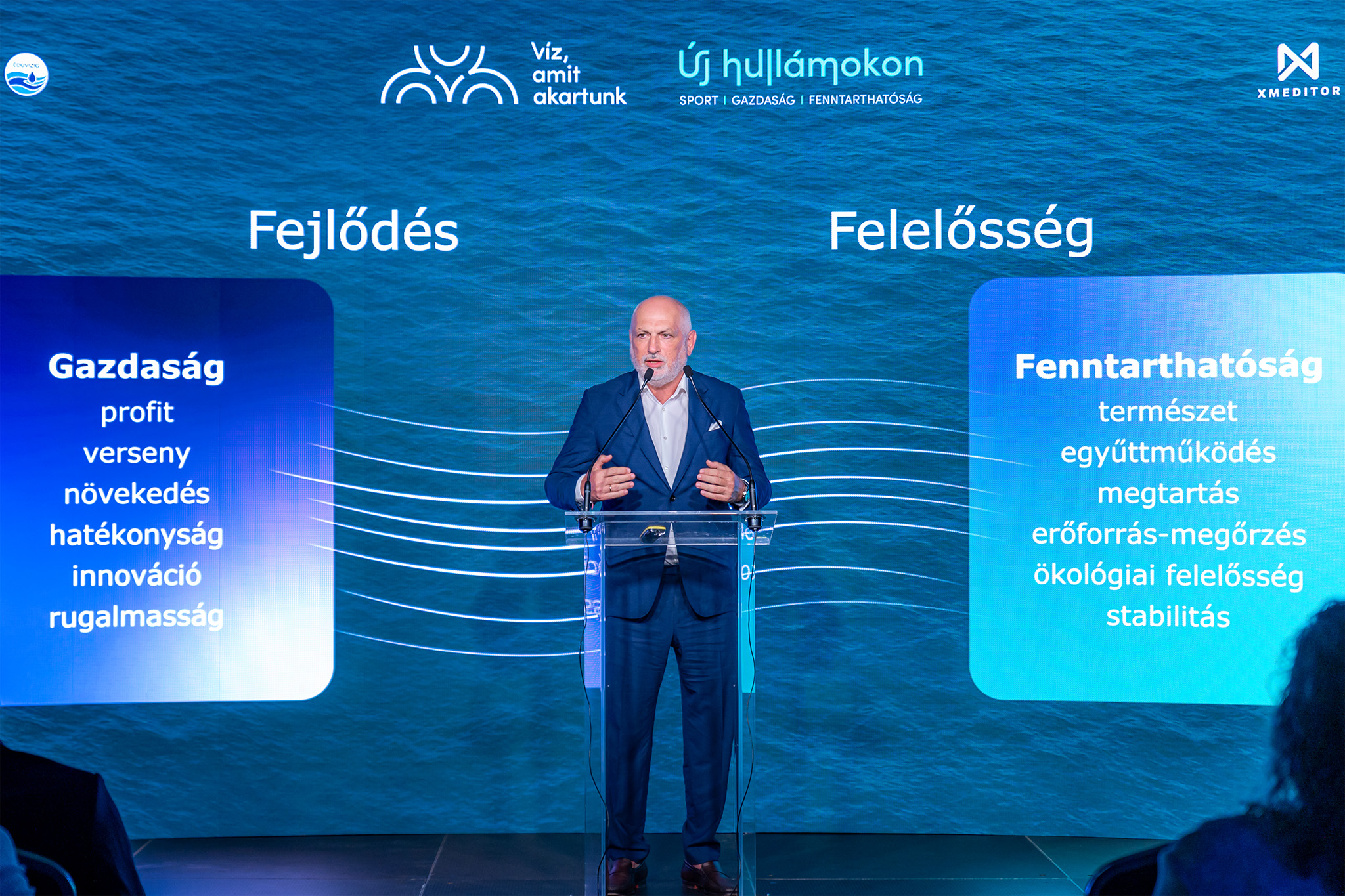
At the fourth "Water We Want" program, conference speakers explored the topics of sports, economics, and sustainability. (Photo: András Adorján)
In his welcoming speech, Dr Ádám Schmidt, State Secretary for Sport, noted that Hungary has won 188 Olympic gold medals in the history of the Summer Olympics, more than 40% of which, 79, were in water sports, including swimming, water polo, modern pentathlon and canoeing. "These successes provide us with role models such as Tibor Benedek, Krisztina Egerszegi, Tamás Darnyi, Danuta Kozák and Katalin Kovács," he said. He emphasized that in order to achieve sporting success, it is necessary to have excellent sports professionals, coaches and sports scientists. He stressed that it is important for Hungarian sports management to ensure the continuous training of sports professionals.
The State Secretary praised the institution in Győr, which, under the leadership of former rector Dr Tamás Szekeres and later President Dr Bálint Filep, has risen to become one of the country’s leading universities. "Széchenyi University helps the world of sport, for example by training sports professionals, but it also actively supports the city's sporting life, whether it be basketball, handball, rowing or canoeing. In addition to competitive sports, the university also plays an important role in building community sports in the region," he emphasized. In his view, the institution can serve as a role model for other cities.
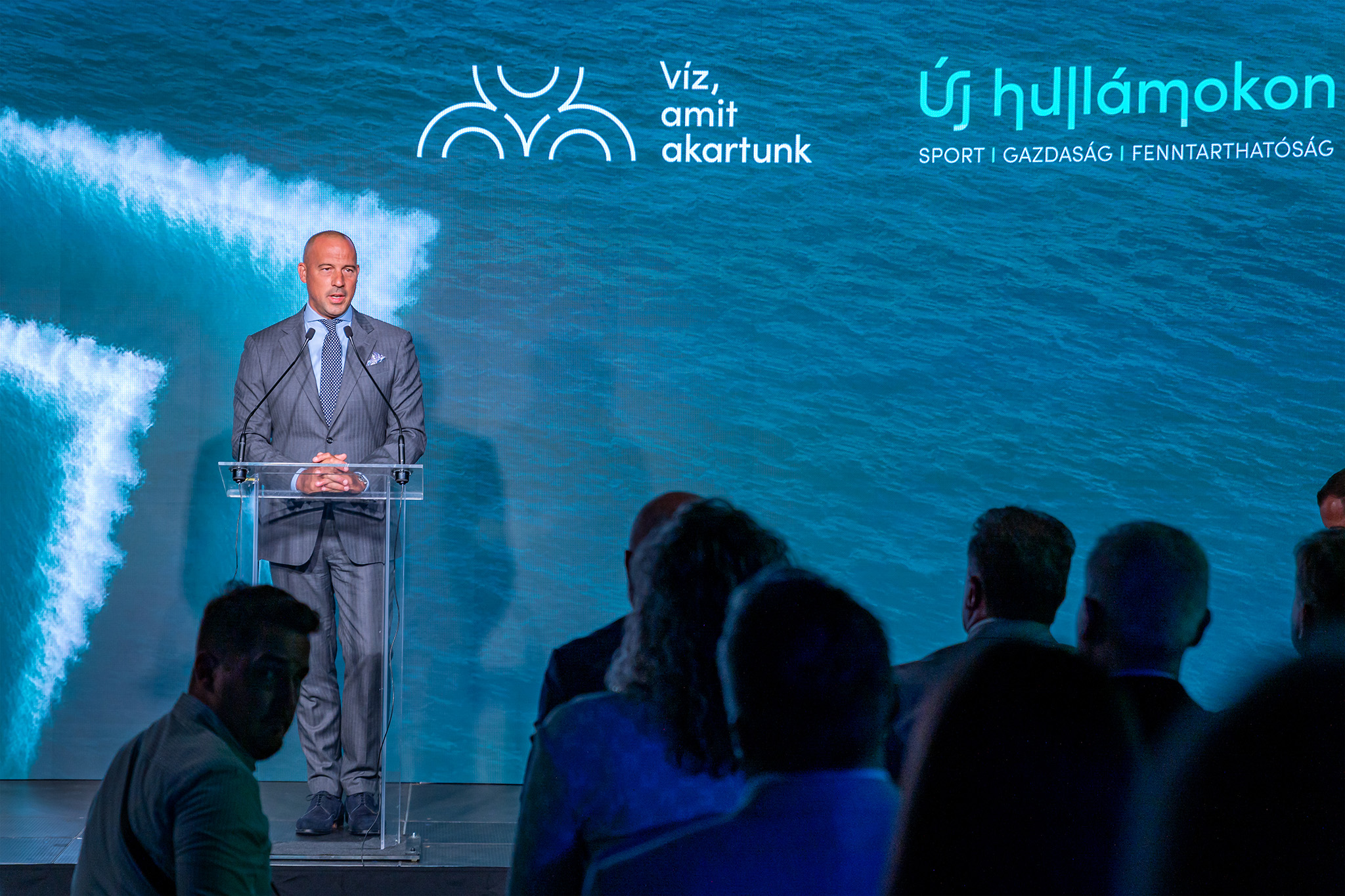
Dr Ádám Schmidt, State Secretary for Sport, praised the role played by Széchenyi István University in sport. (Photo: András Adorján)
Imre Pintér-Péntek, President of the Chamber of Commerce and Industry of Győr-Moson-Sopron County and Vice President of the Hungarian Chamber of Commerce and Industry, recalled with gratitude the cooperation in Győr more than ten years ago, which led to the construction of the Gönyű barrage. As a result, the water levels in the city’s rivers have once again become adequate. "It was recently said at a conference on tourism that the most important factor in tourism today is that locals feel good and tourists see that it is a good place to live. Anyone walking here and seeing the waterfront, the university, and Püspökdő will surely think that Győr is a wonderful European city," he said. In his speech, the president called for economic diversification, noting: "I am convinced that one of the key opportunities for boosting the county’s competitiveness has not yet been fully exploited – and that is the “great blue island,” or in other words, the Szigetköz, Europe’s largest inland delta." He said that by joining forces, Szigetköz and Csallóköz could become a family and eco-tourism destination for the two developed economic regions of Bratislava and Vienna, as the area boasts both natural resources and expertise.
Imre Pintér-Péntek, President of the Győr-Moson-Sopron County Chamber of Commerce and Industry and Vice President of the Hungarian Chamber of Commerce and Industry, spoke about the economic prospects of water-related development opportunities. (Photo: András Adorján)
Dr Angéla Somogyi, Dean of the Faculty of Health and Sports Sciences at Széchenyi István University, explained that the institution has many ties to water beyond its location. "We have long maintained close partnerships with the National Water Authority and the North Transdanubian Water Authority, with whom we implement projects of professional and social significance. Our excellent relationship with the Hungarian National Angling Association is also worth mentioning. It is important to mention the sports clubs located near the university that work closely with our institution, including the swimming, water polo, kayaking, canoeing, dragon boating, and rowing communities," she emphasized. She added that the institution's goal is to develop a training and research portfolio that responds to the real needs of society. "This year, we have expanded our programme with a master's degree in health psychology, and in the future, we will launch master's degrees in sports mental training, sports management, specialist coaching and nutrition science, as well as further education programmes in sports psychology and sports health. Our plans also include a bachelor's degree in sports science and, in collaboration with experts from the National Institute of Sports Health, a bachelor's degree in nursing and patient care with a specialization in physiotherapy," she said.
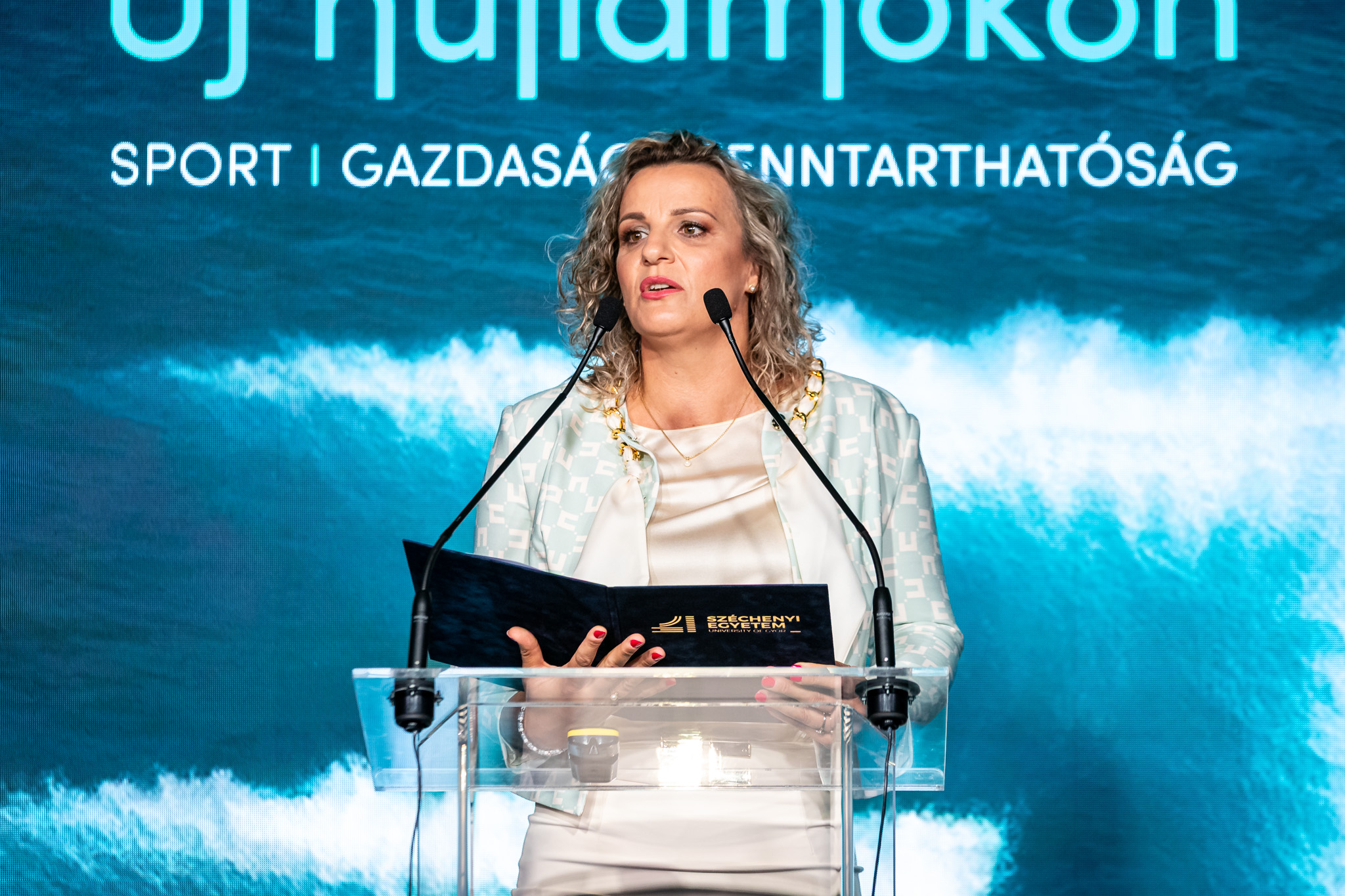
Dean Dr Angéla Somogyi presented the institution's new and upcoming sports and health science courses. (Photo: Máté Dudás)
At the event, participants watched a short film in which personalities connected to Győr and Széchenyi University talked about what the rivers mean to them and what opportunities they offer for the region. Csaba Ábrahám, president of the Győr Water Sports Association, Olympian Kincső Takács, a student at the institution, Péter Varga, master rower at the Arrabona Rowing Club, Péter Hegedűs, head of department at the University Library and Archives, dragon boat coach, Zoltán Zvezdovics, international ship captain, and Dr Zsuzsanna Horváth Iváncsóné, associate professor at the University of Győr, vice president of the Hungarian National Angling Association, and executive president of the Győr-Moson-Sopron County Association of Sport Fishing Clubs, shed light on the potential of our waters from various perspectives..
Gábor Schmidt, president of the Hungarian Canoe Federation, and József Németh, director of the North Transdanubian Water Management Authority, discussed what an international canoe racing course and associated water recreation centre can mean for a city. Gábor Schmidt said that there has been a significant change in how people spend their free time in recent decades, with activity and experience becoming the focus. He went on to explain that the growing popularity of outdoor sports also supports the case for establishing a water-based recreational sports centre in Győr, complete with a kayak-canoe course suitable for hosting international competitions. He cited the Maty-ér course in Szeged as an example, and referred to Malta Lake in Poznań and the complex near Belgrade as international models. He noted that facilities such as these can be venues for competitive sports as well as recreational sports, leisure and culture, generating significant tourism revenues.
In his presentation, József Németh presented the alternatives that had previously been considered for the construction of the flatwater course, including the Győr-Likócs area, the former Rába factory site near the Mosoni-Duna river, the cutting of the river at Püspököde, the backwater in Püspökde, and a new location in Vének. The expert gave a detailed overview of the advantages and disadvantages of each area. “The opportunities are there, and it is worth having a dialogue about them,” he suggested.
Dr Zsuzsanna Horváth Ivancsóné gave a presentation entitled "Why are city fishing competitions popular around the world, and what can they bring to the region's economy?" She said that in Hungary alone, more than one million people enjoy fishing, and every year thousands of tourists visit the country for this activity. "Győr offers exceptional opportunities for fishing competitions, as the city centre is interwoven with rivers and backwaters," she noted. She emphasized that local businesses, accommodations, restaurants, and fishing shops can all benefit from city fishing competitions. He highlighted that these events provide a community experience, promote environmental awareness and are invaluable for the city's image. She added that "city fishing" is not yet operational in the city because it would require the separation of activities on the water in terms of space and time. For this reason, she also proposed the construction of a flatwater kayak and canoe course.
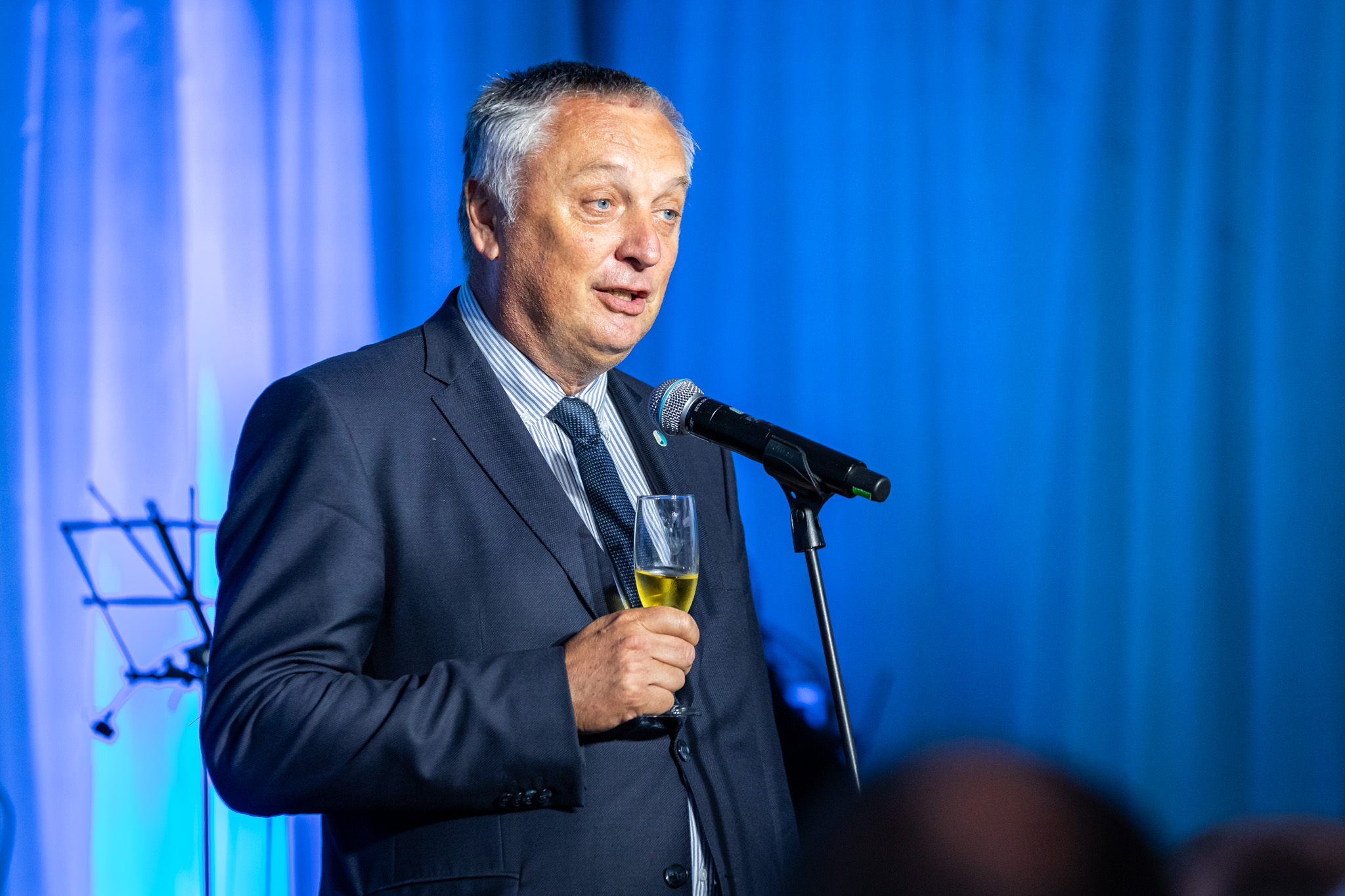
István Láng, Director General of the National Water Authority, reminded us in his toast that June 29 is Danube Day, and this year's slogan is "Our Danube, Our Future." (Photo: Máté Dudás)
Dr Erzsébet Stephens-Sarlós, sensorimotor trainer and researcher at Széchenyi István University, joined the event via video message. She talked about how she studies reflexes that show up during foetal life and help our nervous system develop. These reflexes are closely linked to different cognitive and mental processes. For all this to happen smoothly, we need a watery environment, meaning amniotic fluid. "The primitive reflexes we are born with are involuntary responses of the nervous system to stimuli in our environment. When they are no longer needed, they are inhibited within a year or two after birth. Among them are six to eight that determine children's relationship with water and how easily they learn to swim," he said. The speaker also mentioned an initiative in which Széchenyi University, in cooperation with the National Swimming Program and the Hungarian Swimming Association, is giving Hungarian professionals and coaches the opportunity to learn about methods for overcoming primitive reflexes, thereby making it easier for many children to learn to swim.
Dr Zoltán Alföldi, assistant professor at the Department of Health Promotion and Exercise Science and rowing coach, presented the recent successes of Széchenyi István University's rowers and their rankings in domestic and international competitions. He highlighted that at the 2024 European University Championships in Zagreb, Győr came second in the medal table out of 78 universities across the continent. "Every year, our university holds a joint training camp with the University of Oxford and the University of Cambridge, and we have close professional ties with Princeton University in the US. The latter has offered a full scholarship to one of our rowers, and we have also received an invitation from Yale. In addition, three of our athletes are currently studying at American universities," pointed out the expert, who also highlighted the sports science aspects of the results achieved.
At the event, Dr Barnabás Kovács, Honorary University Professor at Széchenyi István University – who previously served as Consul General in Barcelona – presented the university with a relic from the canoe-kayak and rowing course of the 1992 Barcelona Olympics: buoy number 5. The occasion marked the upcoming Canoe Marathon World Championships, which will be hosted by Győr in September. At those Olympic Games, which hold a special place in Hungarian sporting history, our canoeists and kayakers won one gold, three silver, and two bronze medals – with two of those successes achieved on lane number 5.
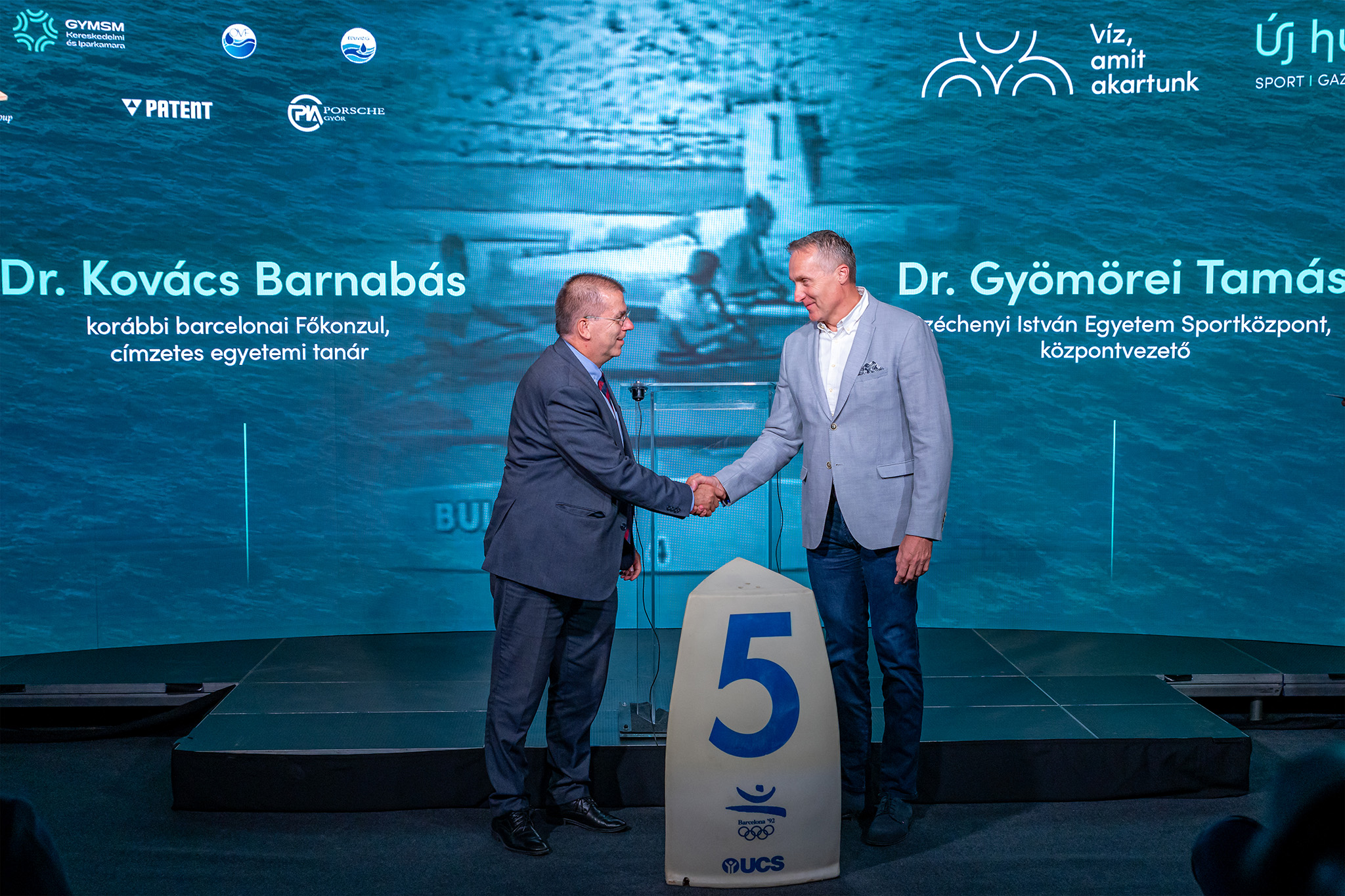
The trophy, donated by Dr Barnabás Kovács, honorary professor at Széchenyi István University, was accepted on behalf of the institution by Dr Tamás Gyömörei, head of the university's Sports Center. (Photo: András Adorján)
Another highlight of the event was the signing of a cooperation agreement between Széchenyi István University and the Hungarian Canoe Federation, which will serve to ensure the successful staging of the ICF Canoe Marathon World Championships in Győr between September 1 and 7, 2025.
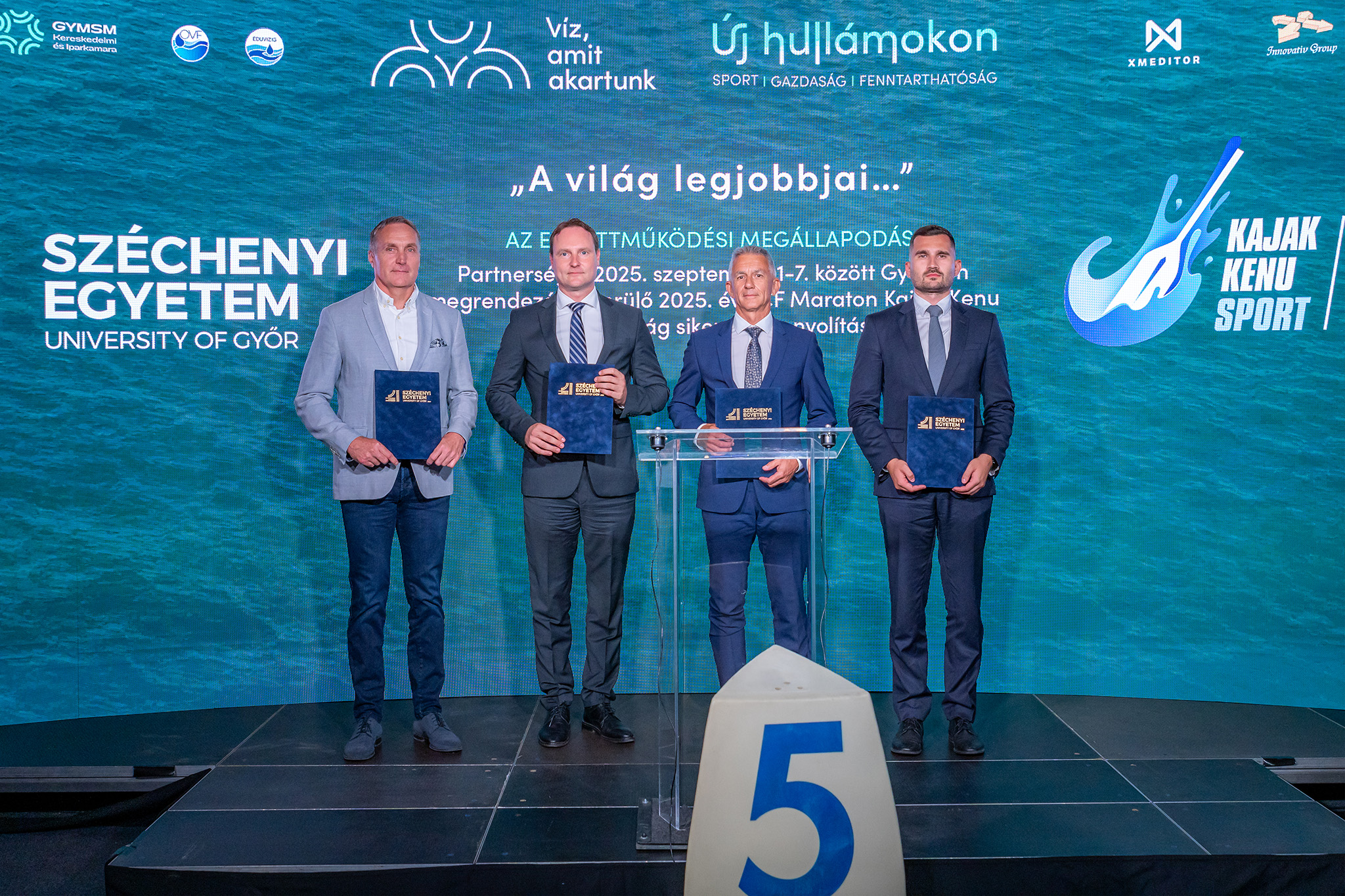
The cooperation agreement was signed by Dr Tamás Gyömörei, head of the Sports Center at Széchenyi István University, and Dr Bálint Filep, president of the university, while Róbert Weisz, chairman of the organizing committee, and Bálint Szakács, secretary general of the association, signed on behalf of the association. (Photo: András Adorján)