 Chinese


SZE Establishes Educational Centre Supporting Sustainability and Energy Research in Zalaegerszeg
Széchenyi István University has recently inaugurated an infrastructure development at the Zalaegerszeg Innovation Park. The first step in creating the Sustainable Energy Laboratory is the newly completed Clean Energy and Mobility Educational Centre, which provides opportunities not only for higher education but also for vocational education and industry to explore and research electric mobility, energy storage, renewable energy sources, and modern energy systems.
The security of energy supply, the development of sustainable energy systems, and the electrification of industry are among the most important strategic issues of our time. The growing prominence of electric mobility, energy storage, and intelligent energy use creates new opportunities for both the economy and society. Recognising this, Széchenyi István University has established the nationally unique Sustainable Energy Laboratory in the Zalaegerszeg Innovation Park. The long-term objective of the investment is to create a knowledge centre that connects education, industrial innovation, and social awareness, thereby contributing to Hungary’s energy independence, economic competitiveness, and sustainable development.
The first step of the development is the opening of the Clean Energy and Mobility Educational Centre, which enables a broad spectrum of training opportunities in the region. The facility can function not only as a higher education centre but also as a hub for vocational education and industrial further education. In addition, it is suitable for delivering the mandatory FAM (live working) courses related to electric and hybrid vehicles, which are to be introduced in the near future. Its uniqueness lies in being the first among Hungarian universities to provide an integrated educational and demonstration environment in the fields of electric mobility and modern energy systems.
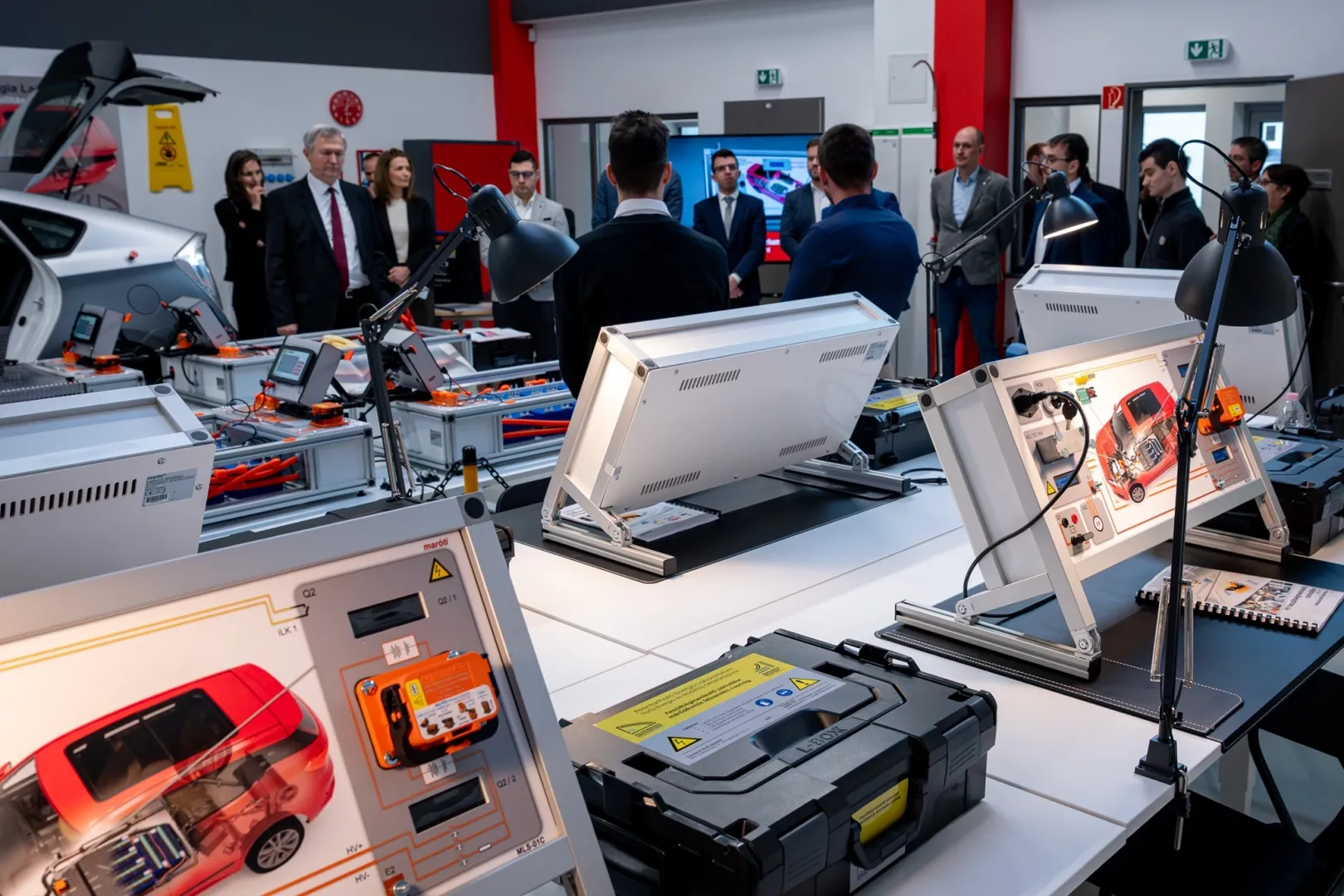
The Clean Energy and Mobility Educational Centre offers unique opportunities in both education and research (Photo: András Adorján)
Professor Ferenc Friedler, Rector and Vice-President for Scientific Affairs at Széchenyi István University, highlighted at the event that energy is no longer merely a technological issue but also a matter of national sovereignty. “Starting from the region, our institution aims to become a key player in the field of sustainable energy. We achieve this by integrating our education, research, and industrial applications, which, through cutting-edge technologies, simultaneously serve our students, researchers, and partners,” he stated.
Zoltán Balaicz, Mayor of Zalaegerszeg, noted: “The developments and research programmes implemented in the innovation park are decisive for the practical training of students and for the future of the city. This development marks an important milestone in that process, demonstrating that together with Széchenyi István University we are able to further strengthen those collaborations that form the basis of sustainable, innovation-driven growth.”
Gábor Szilasi, Ministerial Commissioner responsible for the development of North Zala, emphasised that in an era when energy, sustainability, and technological progress shape our everyday lives, it is particularly important to have places where future professionals can prepare for these challenges.
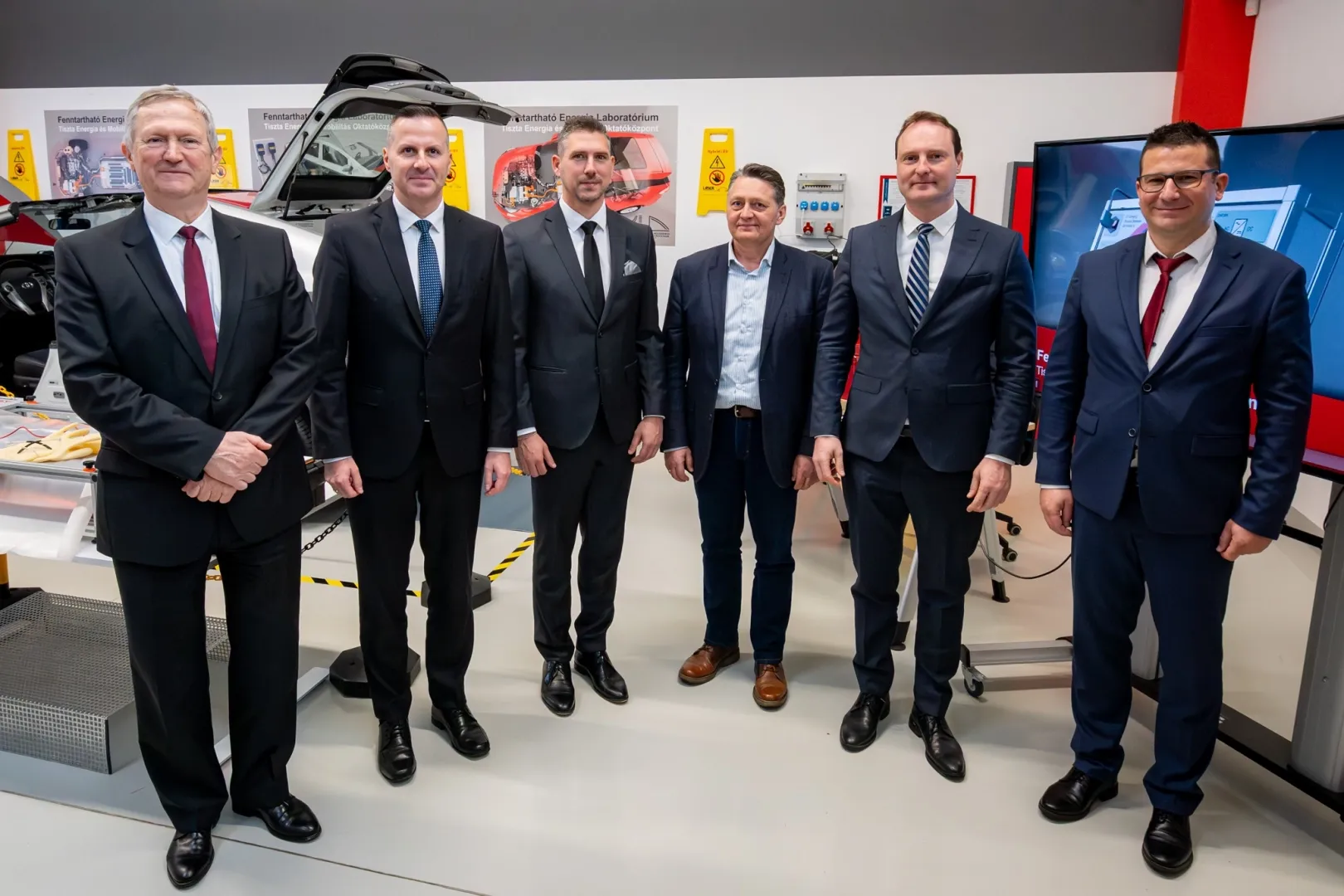
Professor Ferenc Friedler, Rector and Vice-President for Scientific Affairs of Széchenyi István University; Zoltán Balaicz, Mayor of Zalaegerszeg; Gábor Szilasi, Ministerial Commissioner responsible for the development of North Zala; Dezső Kovács, President of the Zala County Chamber of Commerce and Industry; Dr Bálint Filep, President of Széchenyi István University; and Dr Zoltán Weltsch, Head of the Zalaegerszeg Innovation Park, at the presentation of the educational centre (Photo: András Adorján)
Dr Zoltán Weltsch, Head of the Zalaegerszeg Innovation Park, illustrated the importance of the Sustainable Energy Laboratory with a striking statistic: today, energy consumption is increasing at three times the rate of population growth. “Energy is fundamental to our existence, which is why research, development, and training related to it are of paramount importance. Our innovation activities focus on sustainability, materials science, and technology, with particular emphasis on electric mobility, vehicle energetics, energy storage systems, the integration of renewable energy sources, energy efficiency, management, security and operation, as well as hydrogen technologies,” he explained.
Dr Madhavi Srinivasan, visiting professor at Széchenyi István University and Director of the Energy Research Institute at Nanyang Technological University, spoke in a video message about joint research and educational initiatives aimed at ensuring that cutting-edge knowledge is directly utilised in university programmes and industrial collaborations. “The Sustainable Energy Laboratory plays a key role in these efforts and reflects the interdisciplinary approach required today. Education is equally important. I am convinced that this laboratory will not only strengthen regional innovation but will also become a significant hub in the international research network of sustainable energy and mobility,” she said.
At the event, Dr Ádám Vida, Director of Research and Development at Bay Zoltán Applied Research Nonprofit Ltd., and Managing Director of the partly University-owned Edortech Kft., presented their OnLi project, aimed at renewing lithium-ion battery production, which seeks to significantly enhance battery performance. He emphasised that their close professional cooperation with Széchenyi István University and the new laboratory greatly supports their innovation ambitions.