Chinese


SZE Jubilee Conference Aimed to Strengthen Partnerships with Universities Beyond Hungary's Borders
The opportunities and challenges facing Hungarian-language higher education in Hungary and beyond its borders, as well as the use of artificial intelligence in education, were at the heart of SZE's 30th Apáczai International Scientific Conference. Held in Győr on 12–13 November, the anniversary event brought together university leaders, lecturers and researchers from Hungary and neighbouring countries to share their experiences and explore opportunities for professional cooperation.
On 12 and 13 November, the Apáczai Csere János Faculty of Humanities, Education and Social Sciences at SZE organised the Apáczai International Scientific Conference for the 30th time. The anniversary event was held under the title ‘Within and Beyond Our Borders – Opportunities and Challenges for Higher Education in Hungarian in the Age of Artificial Intelligence’. The long-established academic forum aims to foster dialogue between representatives of education, the humanities and the social sciences, in keeping with the legacy of its namesake, János Apáczai Csere. This year's event placed particular emphasis on strengthening ties with Hungarian-language higher education institutions beyond Hungary's borders and on modern teaching methods.
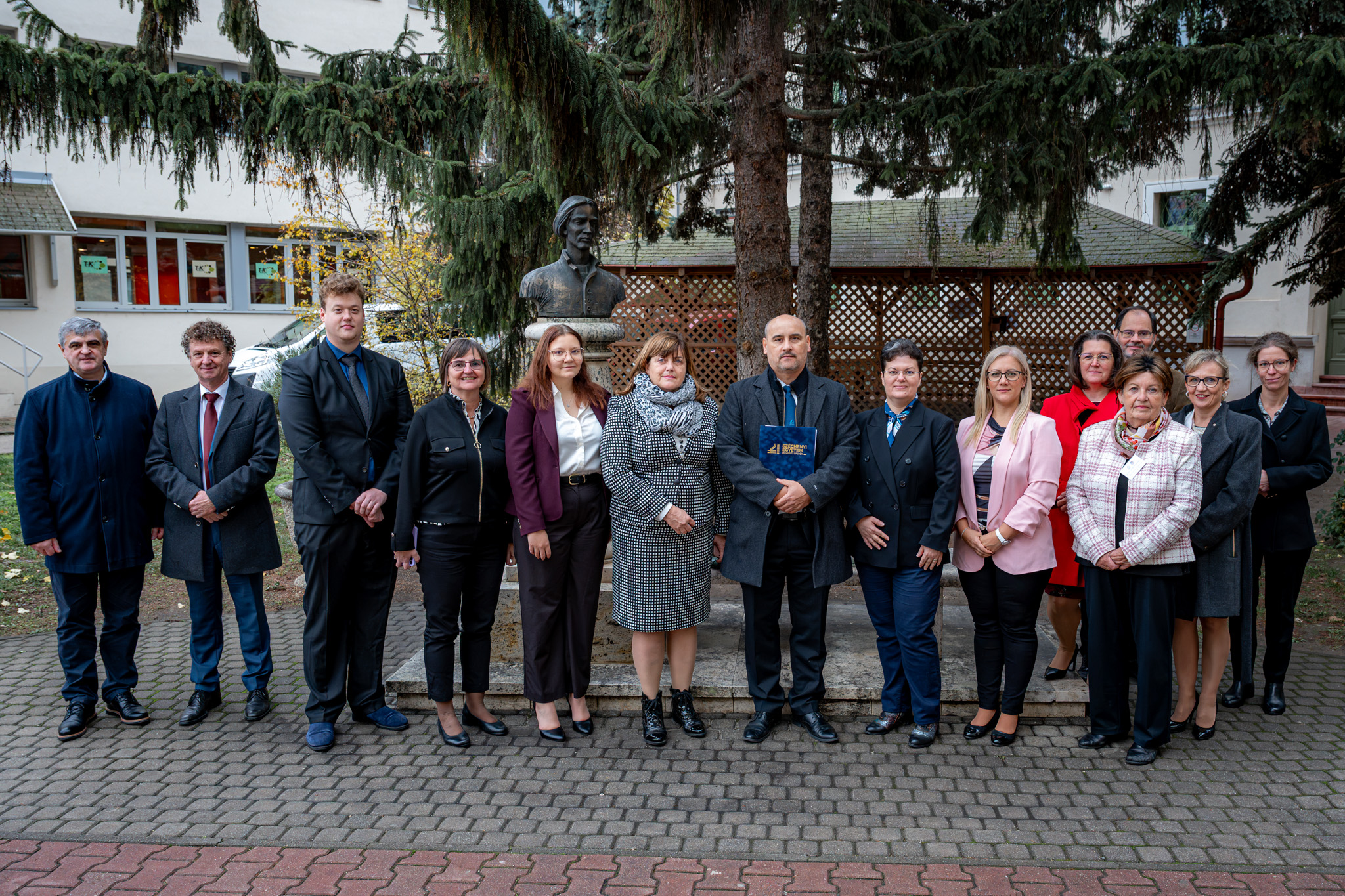
The Apáczai Conference traditionally provides an opportunity for University representatives to pay tribute to the work of its namesake, János Apáczai Csere, by laying a wreath at his statue. Our photograph shows University and Faculty representatives, together with a group of conference guests, taking part in the wreath-laying ceremony at the statue in the courtyard of the building on Liszt Ferenc Street. (Photo: András Adorján)
The conference was opened by Dr Attila Pongrácz, Dean of the Faculty. “Following in the footsteps of our Faculty’s namesake, János Apáczai Csere, one of the aims of this year’s event is to strengthen cooperation with Hungarian-language higher education institutions beyond Hungary’s borders and explore the potential applications of artificial intelligence in education. By providing a platform for this dialogue, we are also taking on a mission that will help increase the international visibility of Hungarian academic achievements,” he said, outlining the aims of the conference.
“We can proudly say that, whereas in the late 1990s we were a college faculty offering programmes in primary teacher education, cultural management and social pedagogy, we have since become part of a nine-faculty university that holds a prominent position in the international academic community and major university rankings. Today, we contribute to the University's educational provision in pedagogy, the humanities and the social sciences through nine bachelor's programmes, five master's programmes, courses also offered in English, and a wide range of specialist postgraduate programmes,” the Dean explained. He added that the Faculty also pays particular attention to higher education institutions outside Hungary, regarding them as strategic partners in both education and research.
At the plenary session, Professor Dr Eszter Lukács, SZE's Vice-President for International Affairs and Strategic Relations, gave a presentation on the University's international standing. She pointed out that around 300 million students study at the world's 30,000 universities, with approximately 10 million of them choosing to study abroad. She emphasised that the role of higher education institutions outside Hungary is particularly complex. In addition to teaching and conducting research in their respective countries’ official languages, they also regard the preservation of the Hungarian language as a strategic priority. In the global arena, however, English and other world languages are essential for academic visibility.
In her presentation, she outlined SZE's internationalisation efforts. She explained that over the past 10 years, the number of programmes offered in English had increased from two to 63, while the number of international students had risen to nearly 1,700. The balance between international students funded by scholarships and those paying their own tuition fees had also changed significantly: whereas the former had made up the majority in previous years, there are now twice as many self-funded students as scholarship holders in the current academic year. The Vice-President also addressed the University's international publication and citation indicators and outlined the opportunities available for visiting professors. She emphasised that colleagues from partner institutions outside Hungary are also warmly welcome to take part in the one-semester teaching and research programme.
At the conference, József János Kepli, Senior Expert at SZE's Centre for AI- and Future Strategies, presented the University's institutional responses to the use of artificial intelligence, while Andrea Csillag, a staff member at the National Office of Vocational Education and Training and Adult Learning, focused in her presentation on the skills needed to use this new technology successfully.
The plenary session on the opening day also featured presentations by the leaders of higher education institutions outside Hungary. Those taking part in the professional discussion included Professor István Csernicskó, Rector of Ferenc Rakoczi II Transcarpathian Hungarian University in Berehove; Professor Peter Kónya, Rector of the University of Prešov; Dr József Pálfi, Rector of Partium Christian University in Oradea; Dr László Bese, Dean of the Faculty of Education at Selye János University in Komárno; Dr László Szekeres, Dean of the Faculty of Central European Studies at Constantine the Philosopher University in Nitra; Professor Rita Horák, Deputy Dean for Science at the Hungarian Language Teacher Training Faculty of the University of Novi Sad; and Professor István Szőköl, Head of the Department of Pre-primary and Primary Pedagogy at the Faculty of Education of Comenius University in Bratislava.
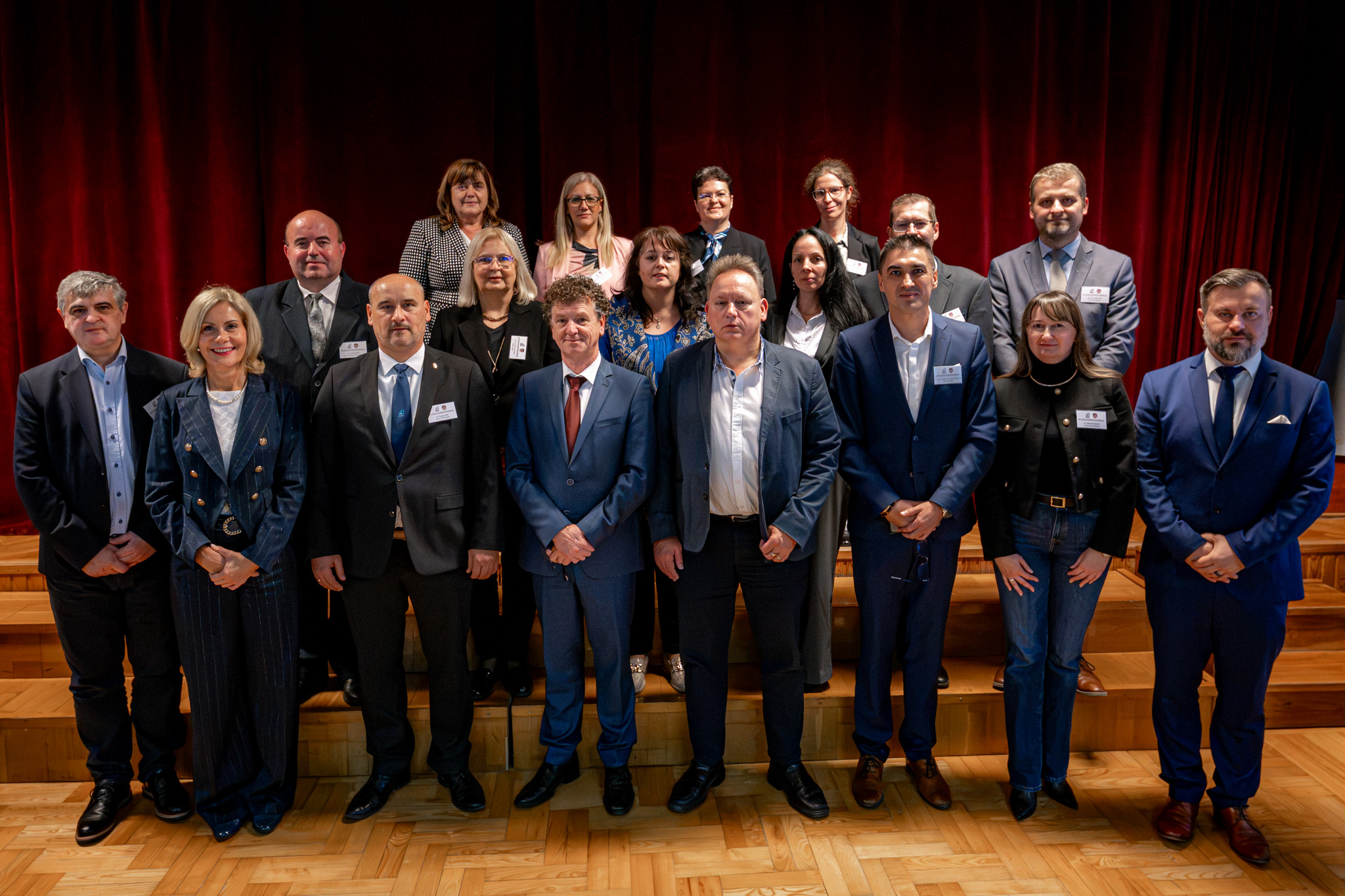
The conference organisers and invited speakers. (Photo: András Adorján)
On the second day, the discussions continued with a panel session exploring the connections between Hungarian higher education across borders. Participants looked at opportunities for joint research, educational cooperation and professional links between institutions. In addition to Dr László Bese and Dr László Szekeres, who had given presentations the previous day, the panel discussion featured Professor Valéria Pintér Krekić, Dean of the Hungarian Language Teacher Training Faculty at the University of Novi Sad; Dr Tibor Szabó, Vice-Dean for Research at the Faculty of Central European Studies of Constantine the Philosopher University in Nitra; and Dr Okszana Talabircsuk, Deputy Director of the Ukrainian-Hungarian Educational and Research Institute at Uzhhorod National University. The programme then continued with almost 100 presentations in 14 thematic sections, covering areas including teacher education, special needs education, artificial intelligence, international relations, linguistics, human resource development, health promotion and the natural sciences. The conference will be followed by the publication of a volume of conference proceedings and further cross-border cooperation in higher education.
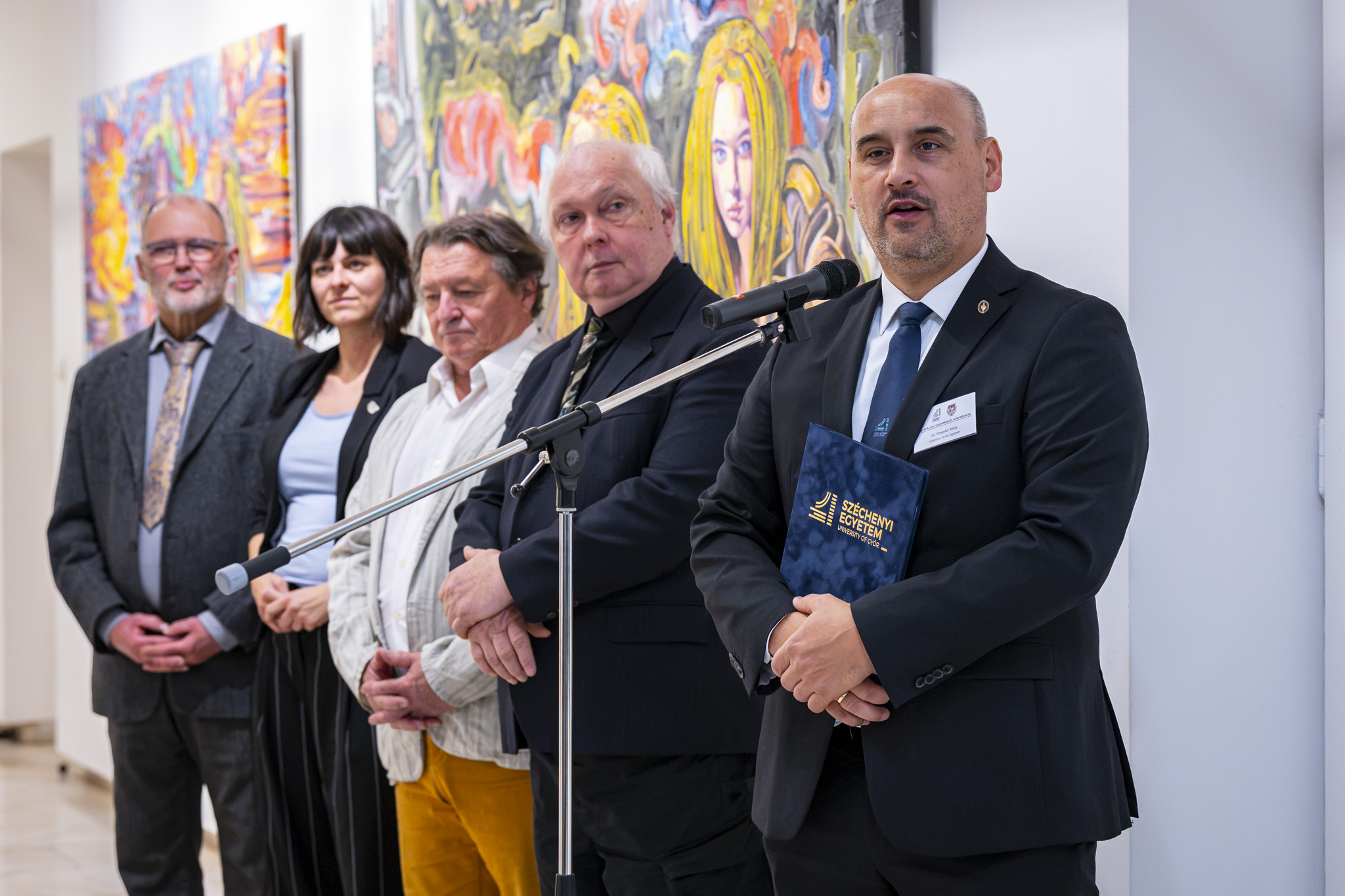
The scientific programme was complemented by a cultural event: an exhibition entitled ‘Questions and Answers’ opened at the Cziráki Lajos Exhibition Space of the Apáczai Faculty, featuring works by the Faculty's artist-lecturers István Balogh, Károly Borbély, Judit Mile-Tóth and Dr László Szunyogh. Our photograph shows the artists with Dr Attila Pongrácz, Dean of the Faculty, at the opening of the exhibition. (Photo: Gergely Nagy)