Chinese


SZE researchers present more than 30 years of experience in water replenishment in the Szigetköz
Three publications summarising the history and results of floodplain rehabilitation in the Szigetköz, as well as lessons that can also be applied internationally, were recently presented at DALIA Day in Dunasziget. As part of the EU-funded project, the Szigetköz Water Management Research Group at SZE is involved in examining water management solutions in the region, assessing the long-term effects of interventions and sharing knowledge.
The stretch of the Danube flowing through the Szigetköz is of exceptional natural value. Its complex system of river branches, oxbow lakes, wetlands and floodplain forests forms one of the most distinctive river landscapes in Central Europe. However, river regulation works and the diversion of the Danube in 1992 left many side channels without water, lowered groundwater levels, and caused significant deterioration in the condition of natural habitats. To mitigate these adverse developments, a system of water recharge and rehabilitation measures has been gradually put in place over the past three decades.
The international project known as DALIA (Danube Region Water Lighthouse Action) also aims to document and share the experience gained. Supported by the Horizon Europe programme, it is being implemented with the participation of 22 partners from nine countries. The cooperation, coordinated by the General Directorate of Water Management, examines solutions to improve the condition of rivers and wetlands at nine pilot sites, including the Szigetköz, as well as opportunities to apply these solutions in other regions.
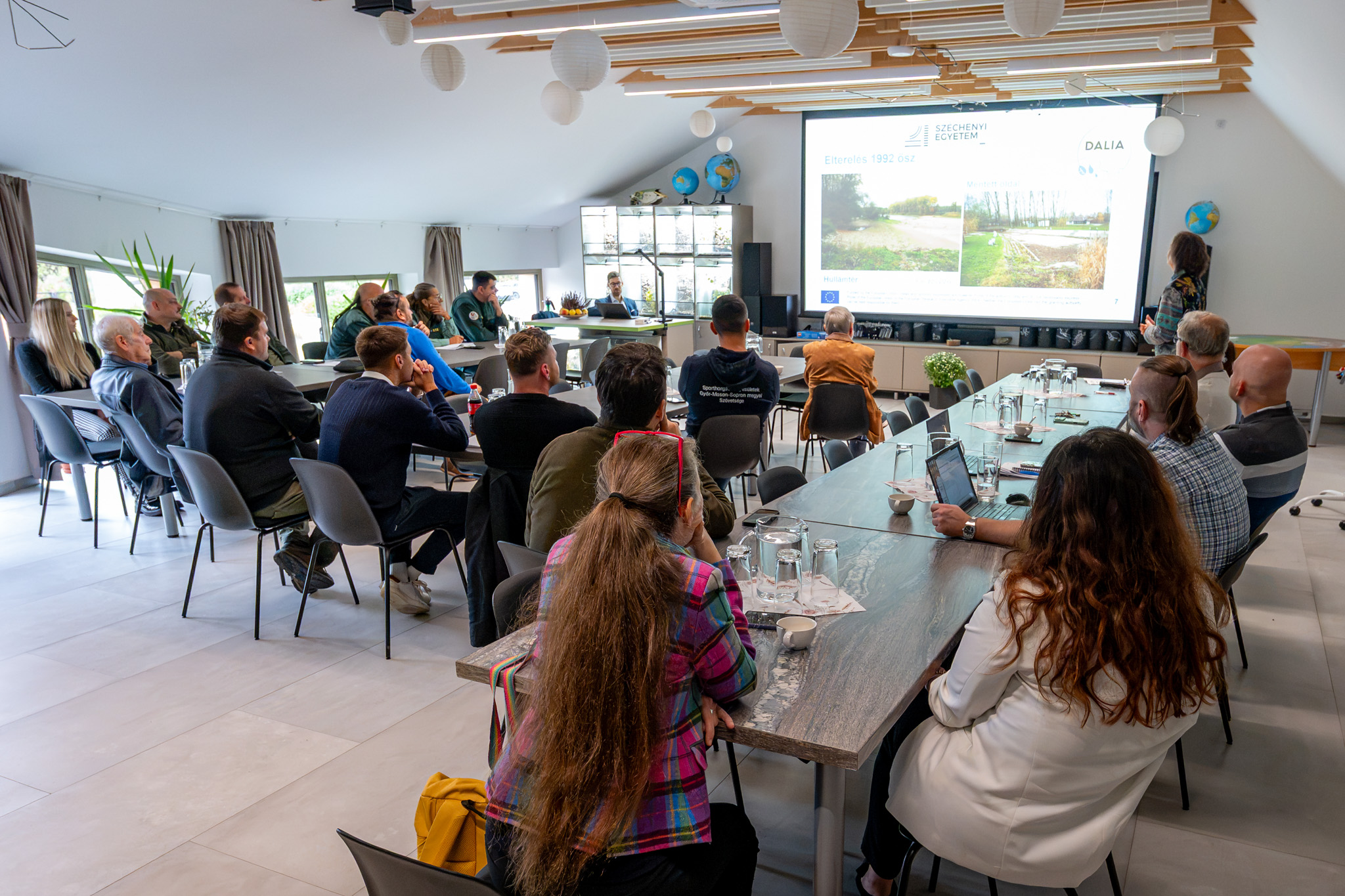
At DALIA Day in Dunasziget, water management and environmental protection professionals, researchers, and those interested in nature conservation had the opportunity to learn about the research conducted by SZE in the Szigetköz. (Photo: András Adorján)
At DALIA Day, held at the Szigetköz Experience Centre in Dunasziget, water management and environmental protection professionals, researchers and people interested in nature conservation had the opportunity to learn about SZE's research in the Szigetköz. Experts from the Water Management Research Group presented, among other things, the main findings of studies examining the effects of water replenishment interventions on water supply, habitats, agricultural activities and recreational opportunities, together with the related long-term assessments.
With contributions from the University's researchers, three publications were also produced. The detailed English-language study, entitled Szigetköz – Large-Scale Floodplain Rehabilitation, presents the history of water management in the region in eight chapters, illustrated with more than a hundred colour photographs and figures. Two shorter, informative booklets in Hungarian and English were also produced on the basis of this professional study. The Hungarian edition, entitled Szigetköz – From River Regulation to Water Replenishment, takes readers through the transformation of the Danube and the surrounding landscape in 34 short stories.
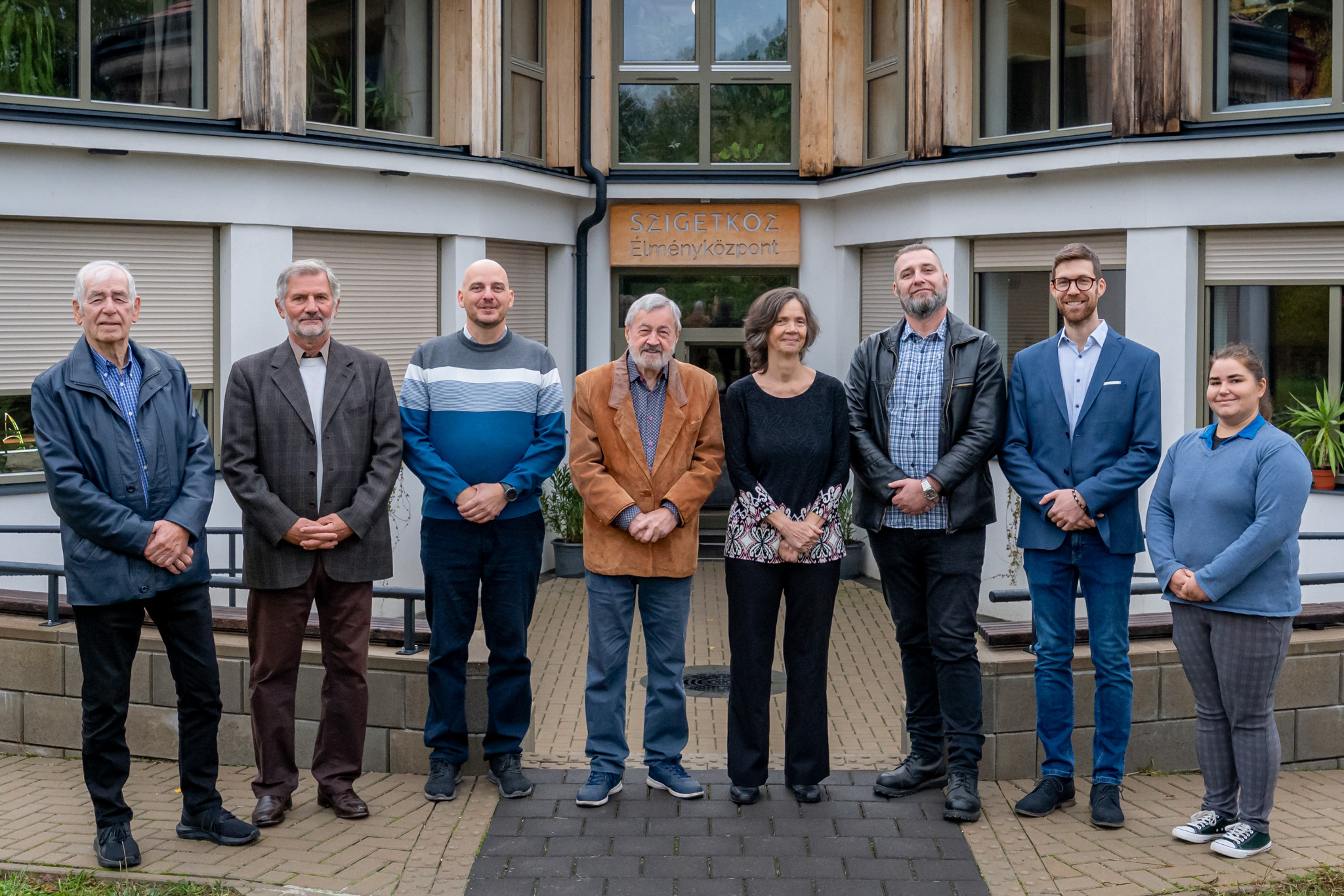
The authors and reviewers of the study presented at DALIA Day in front of the Szigetköz Experience Centre in Dunasziget. From left to right: Miklós Pannonhalmi, Former Deputy Director of Engineering of the North-Transdanubian Water Directorate (reviewer); Emil Janák, Water Management Expert; Attila Kálmán, Engineer-Economist and Doctoral Student; Professor Dr Ferenc Ligetvári, Doctor of the Hungarian Academy of Sciences (Reviewer); Dr Katalin Bene, Associate Professor and Leader of the Szigetköz Water Management Research Group at SZE; Gergely Ámon, Design Engineer and Doctoral Student; Máté Chappon, Assistant Lecturer and Doctoral Student; and Klaudia Madarász, Department Engineer. The authors are members of the Szigetköz Water Management Research Group at SZE. (Photo: András Adorján)
Dr Katalin Bene, Leader of the Szigetköz Water Management Research Group at SZE, highlighted the wider dissemination of experience gained in the Szigetköz as one of the project's key objectives. “The scale and complexity of the rehabilitation work in the Szigetköz, together with the experience gained over several decades, are significant internationally. Through the DALIA project, we sought to demonstrate, taking technical, environmental and social considerations into account, what decisions and solutions led to the development of the water recharge system we have today. We considered it important to make the experience gained here accessible to experts in other countries, while also presenting the results in a form that is accessible and understandable to a wider audience,” she said.
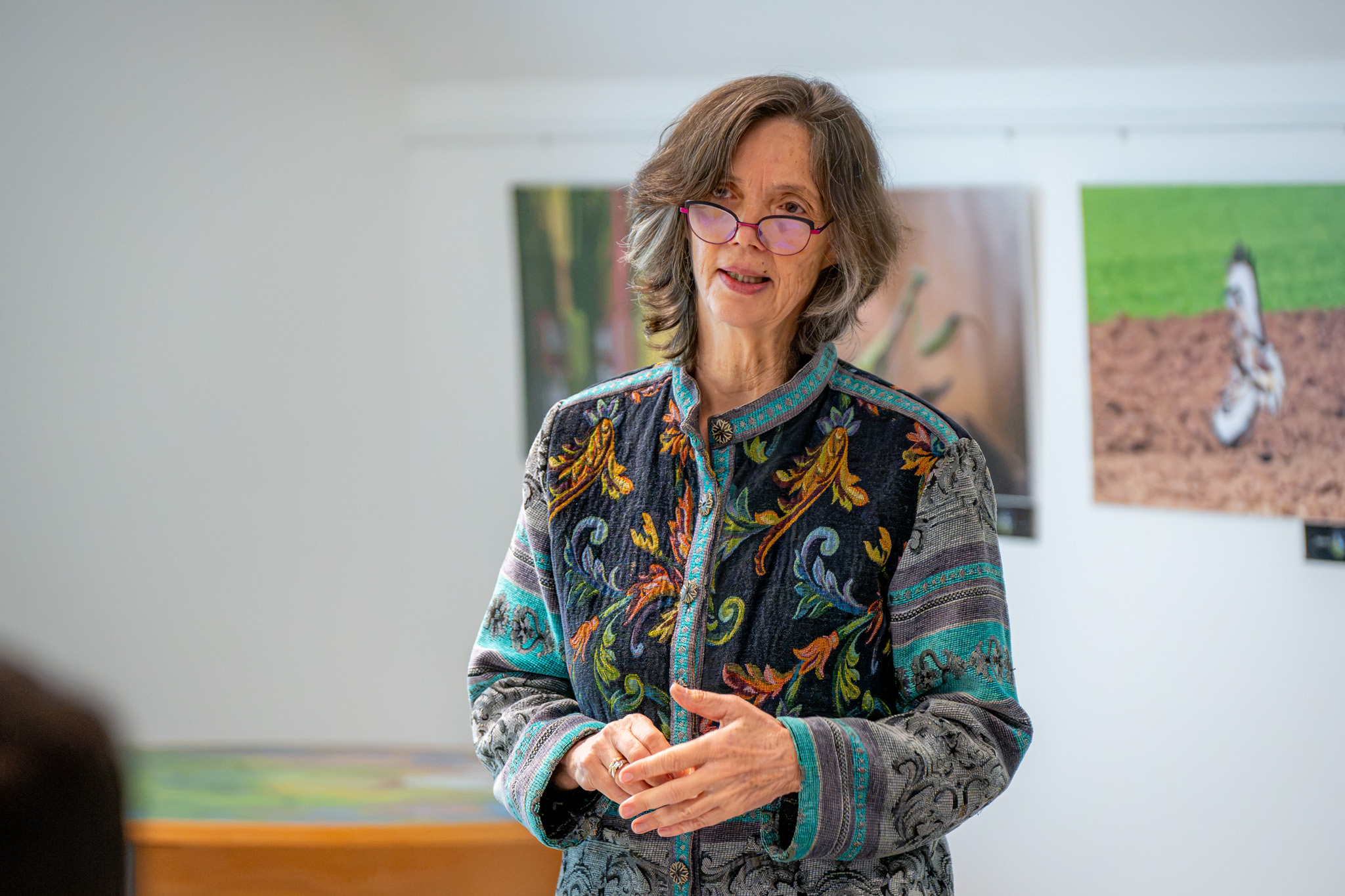
Dr Katalin Bene, Associate Professor at SZE and Leader of its Water Management Research Group. In addition to the technical solutions for water recharge, she is one of the authors of studies exploring the historical and social changes in the Szigetköz. (Photo: András Adorján)
Máté Chappon, a doctoral student and lecturer at the University's Department of Transport Infrastructure and Water Resources Engineering, spoke about the practical experience gained from the rehabilitation of the Szigetköz. “Restoring such a complex water system is not merely an engineering task. Success depends on involving all stakeholders in the planning and decision-making process, from experts and authorities to local communities. Reconciling different interests and practical considerations is just as important as finding the right technical solutions. The example of the Szigetköz shows that achieving sustainable long-term results requires ongoing dialogue, cooperation and adaptation based on experience,” he stressed.

Máté Chappon, lecturer and doctoral student at SZE. (Photo: András Adorján)
At DALIA Day, the animated short film The Black Poplar and the Danube was also presented. Produced by the Szigetköz Water Management Research Group at SZE and the Hungarian animation studio Cinemon Entertainment, the film tells the story of floodplain rehabilitation in the Szigetköz in an accessible way. It was produced with the support of the DALIA project as part of the People Who Speak Water series, which presents established water management solutions.