Chinese


SZE strengthens its position in the Times Higher Education Interdisciplinary Science Rankings
SZE retained its position in the 2027 Times Higher Education (THE) Interdisciplinary Science Rankings, published on 18 November, remaining in the 601–800 band. The international ranking assesses the effectiveness of research that brings together different academic disciplines, as well as the institutional conditions that support such work.
The Interdisciplinary Science Rankings, compiled by Times Higher Education (THE) in collaboration with Schmidt Science Fellows, highlight the importance of research that crosses disciplinary boundaries. Now in its third edition, the ranking examines how universities facilitate collaboration between different fields and the outcomes resulting from these efforts. In the results published on 18 November, SZE was placed in the 601–800 band, consistent with its performance in the previous year.
The ranking methodology is based on three main pillars, assessed using a total of 11 metrics. Inputs, including research and industry funding, account for 19 per cent of the overall score, while institutional support, such as research infrastructure and conditions facilitating collaboration, accounts for 16 per cent. The greatest weight, 65 per cent, is assigned to outputs, which are assessed on the basis of the number and proportion of publications, their scientific impact and quality, and the academic reputation of universities among researchers.
SZE’s diverse academic profile provides a favourable basis for cross-disciplinary collaboration. The expertise represented across its nine faculties in technical sciences, information technology, agricultural sciences, economics, law, health sciences, sport sciences, the humanities and social sciences enables researchers to explore complex questions from a range of perspectives. An interdisciplinary approach is particularly important in fields where technological development is closely interconnected with social, economic and environmental considerations.
“Collaboration between academic disciplines is increasingly becoming a key factor in research success. In many cases, the most important questions can only be answered when experts from different fields work together to find solutions. Our University’s broad portfolio of academic programmes and research activities provides a sound basis for this, while retaining our position in the international rankings provides us with valuable feedback,” said Professor Dr Eszter Lukács, Vice-President for International Affairs and Strategic Relations at SZE. She added that the University aims to ensure that its expertise is put to use in as many fields as possible, and that the achievements of its researchers create value not only for the scientific community but also for the economy and society. She emphasised that a modern research environment, the strengthening of domestic and international partnerships, and institutional support that encourages collaboration between different academic disciplines are essential to achieving this.
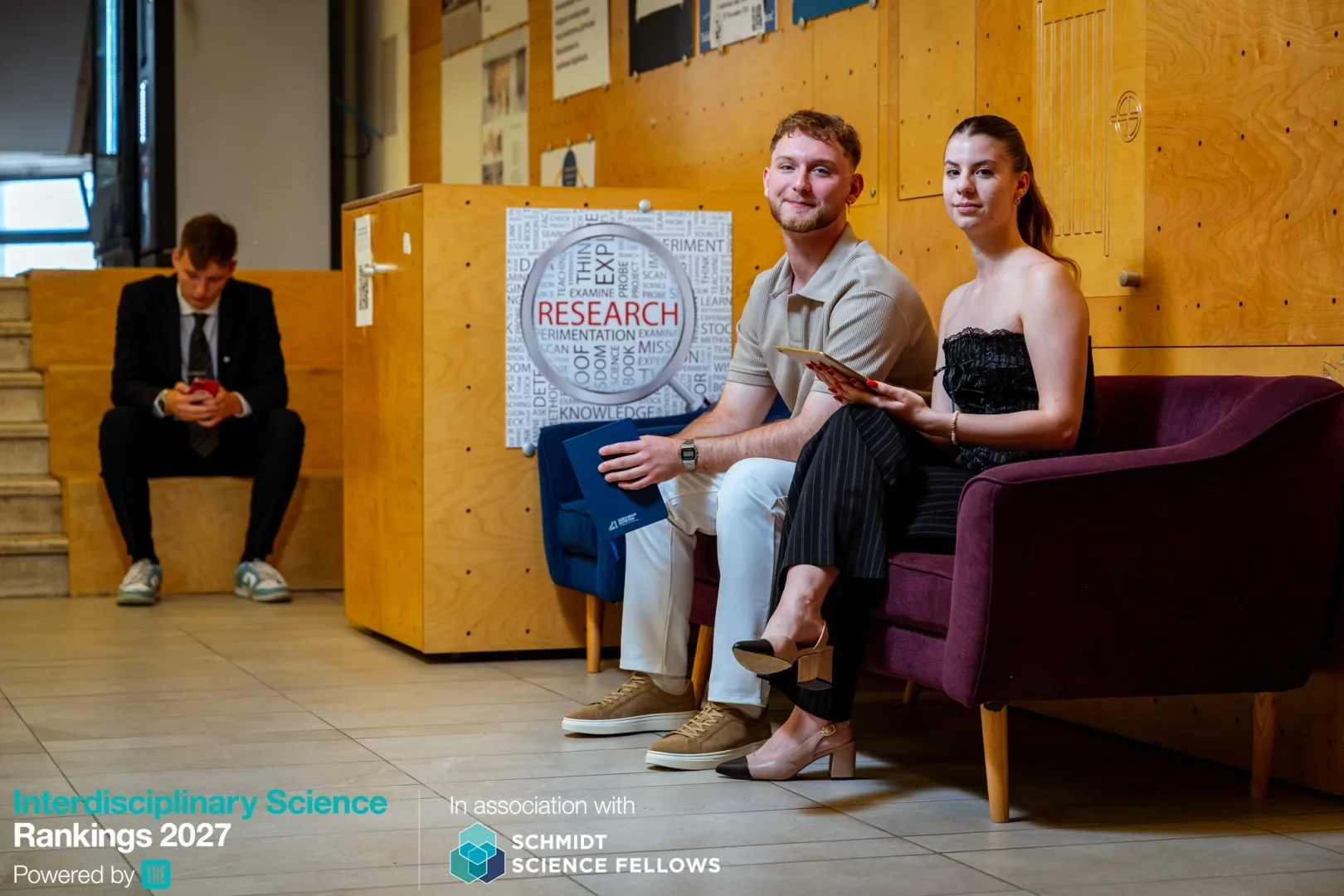
The University’s diverse range of academic programmes and research activities offers students numerous opportunities to explore different fields of study. (Photo: Máté Dudás)