 Chinese


The Rhythm of Nature: Students from Ten Countries Present Spring Traditions at SZE
Spring renewal was at the heart of Széchenyi István University’s event entitled “The Rhythm of Nature”, where international students presented traditions associated with the season in their home countries through music and melodies. The programme offered opportunities both for learning and for fostering connections between different cultures.
One of the key values of Széchenyi István University’s international student community—numbering over a thousand students from nearly ninety countries—is cultural diversity, which the institution’s International Directorate, through its Centre for Mobility and Scholarship, supports with regular intercultural programmes. The initiative “The Rhythm of Nature” reflected this approach: participants not only presented their own traditions but also gained first-hand experience of one another’s customs.
The theme of the event was defined by spring, renewal and new beginnings, closely linked to the message of the International Day of Happiness designated by the United Nations on 20 March. The aim of this international day is to draw attention to the importance of well-being, community relationships and social balance, emphasising that these are determining factors not only at an individual but also at a global level.
Students from thirty different countries took part in the event. Among them, young people from Nigeria, Ethiopia, Sudan, Mongolia, Turkey, Bangladesh, Indonesia, India, Uganda and Hungary showcased their cultures, creating an opportunity for students from diverse backgrounds to meet. The focus was on how the arrival of spring is associated with rebirth, freedom or the celebration of traditional festivals. Special attention was given to the Hungarian presentation: Anna Bedics, an International Relations student, introduced Hungarian Easter customs, highlighting the significance of Good Friday, which commemorates the crucifixion of Jesus Christ, as well as the message of Easter Sunday, which celebrates the Resurrection. She also spoke about the still-living tradition of Easter Monday sprinkling.
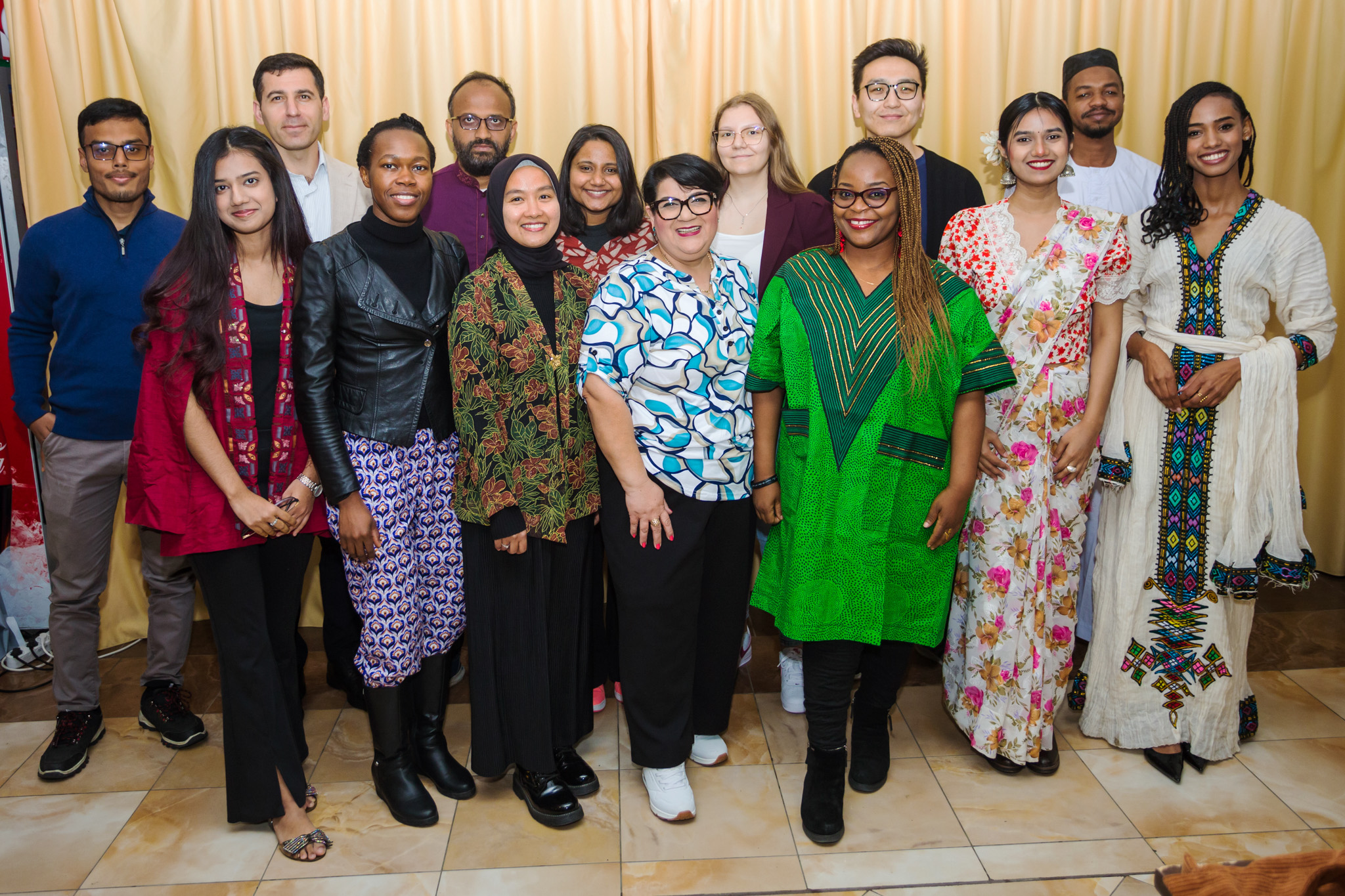
Participants of the “The Rhythm of Nature” programme at Széchenyi István University – students presented the cultural traditions of ten countries, which they also evoked through their attire (Photo: Márton Ódor)
A moving moment of the programme came when participants sang the Hungarian folk song “Tavaszi szél vizet áraszt” (Spring Wind Brings Floodwaters).
“I sincerely believe that music has the power to connect people from different cultures. Seeing our students sing together, learn from one another, and joyfully perform our folk song was both uplifting and touching – a beautiful reminder that shared experiences can create lasting connections across borders,” said Sylvia Páliné Nyiri, staff member of the International Directorate, institutional coordinator of the Scholarship Programme for Christian Young People, and chief organiser of the event.
Netsanet Temesgen from Ethiopia, a master’s student in Infrastructure Engineering and a scholarship holder of the Scholarship Programme for Christian Young People, also highlighted what a great experience it was for her to participate in the programme and to learn about other cultures through music. “I am proud that I could represent Ethiopia, and singing the Hungarian folk song together will remain a memorable experience for me,” she said.
Ibrahim Bakri from Sudan, a doctoral student at the Wittmann Antal Multidisciplinary Doctoral School of Plant, Animal and Food Sciences and a Stipendium Hungaricum scholarship holder, emphasised: “I was able to learn about many cultures and traditional songs from different parts of the world. While decorating eggs, I met new people, and I also learned more about Hungarian Easter traditions, which combine both Christian and folk elements.”
“This event meant a great deal to me: presenting my homeland strengthened my connection to home even further. Singing the Hungarian folk song reinforced the idea that although we come from different countries, we can easily connect with one another through music,” said Khanom Sanjida from Bangladesh, a self-funded master’s student in Supply Chain Management.
For Dr Nurullah Bektas from Turkey, a former Stipendium Hungaricum doctoral student at the Doctoral School of Multidisciplinary Engineering Sciences, it was important to present Nevruz, which marks the celebration of spring for hundreds of millions of people in his homeland and beyond. “It felt as though I could bring a piece of my home into the University community in Győr. Singing “Tavaszi szél vizet áraszt” together stayed with me long after the event, reminding me that music needs no translation,” he said.
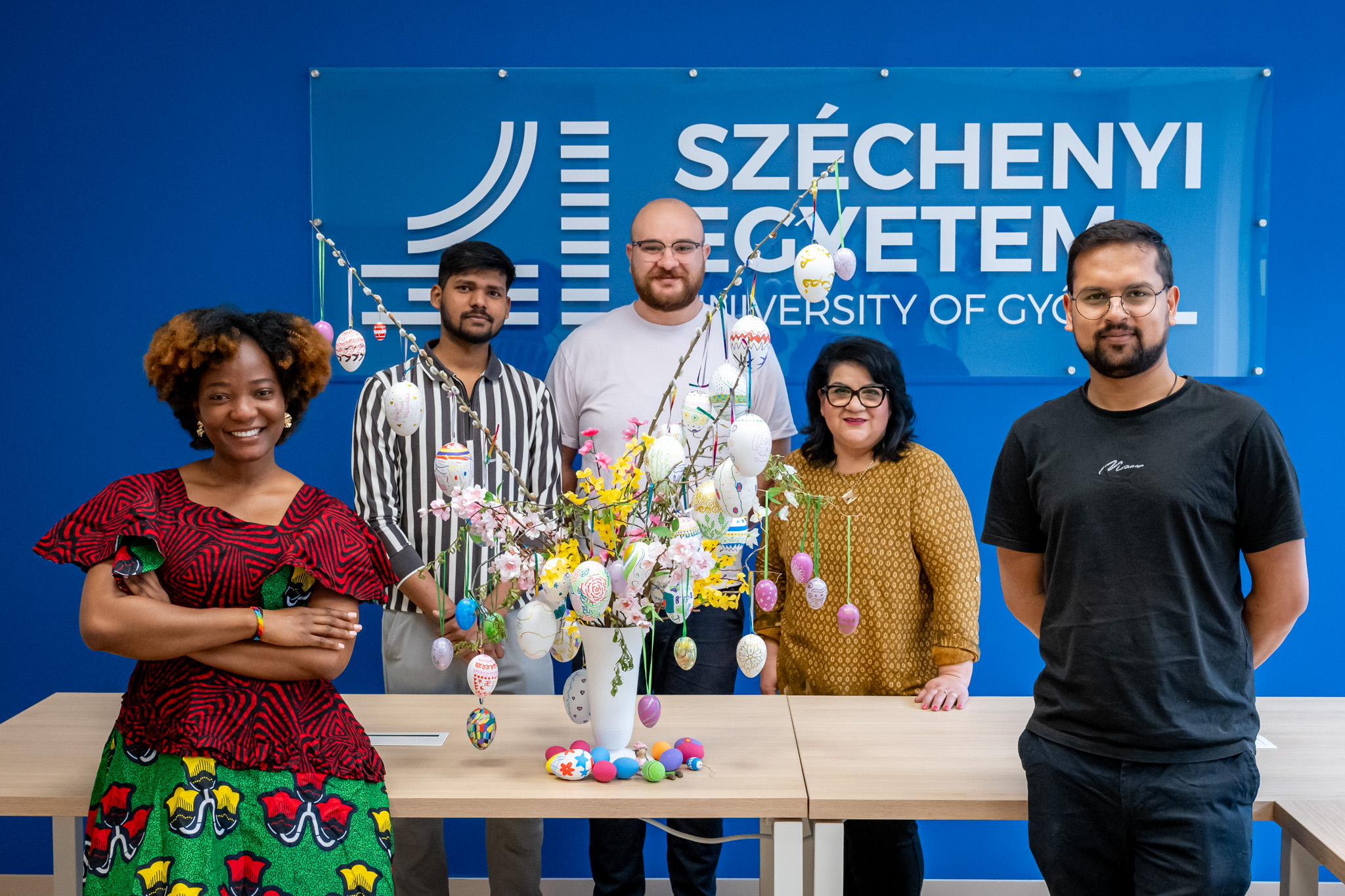
A creative activity accompanied the presentations: participants decorated Easter eggs, which were then used to create an Easter egg tree (Photo: András Adorján)