Chinese


University and ministry leaders discuss talent development and the future of TDK at SZE
The 7th National Student Research Forum (TDK Forum), jointly organised by the National Council of Students’ Research Societies (OTDT) and Széchenyi István University (SZE), took place in Győr on 15–16 October 2026, attracting more than 250 participants. The two-day event focused on the future of scientific talent development in Hungary.
The National Student Research (TDK) Forum is a key professional platform for discussions about Hungary’s student research movement. It brings together leaders of higher education institutions and heads of institutional student research programmes, members of the professional committees of the National Council of Students’ Research Societies (OTDT), science policy decision-makers, and leaders of student and doctoral student representative bodies to review the current state of TDK, share experiences and set directions for talent development in the years ahead. The event featured presentations on scientific talent development by Mihály Pósfai, President of the Hungarian Academy of Sciences; Péter Horváth, State Secretary for Science Policy and Innovation at the Ministry of Science and Technology; and Sándor Katz, State Secretary for Higher Education at the Ministry of Education and Children’s Affairs.
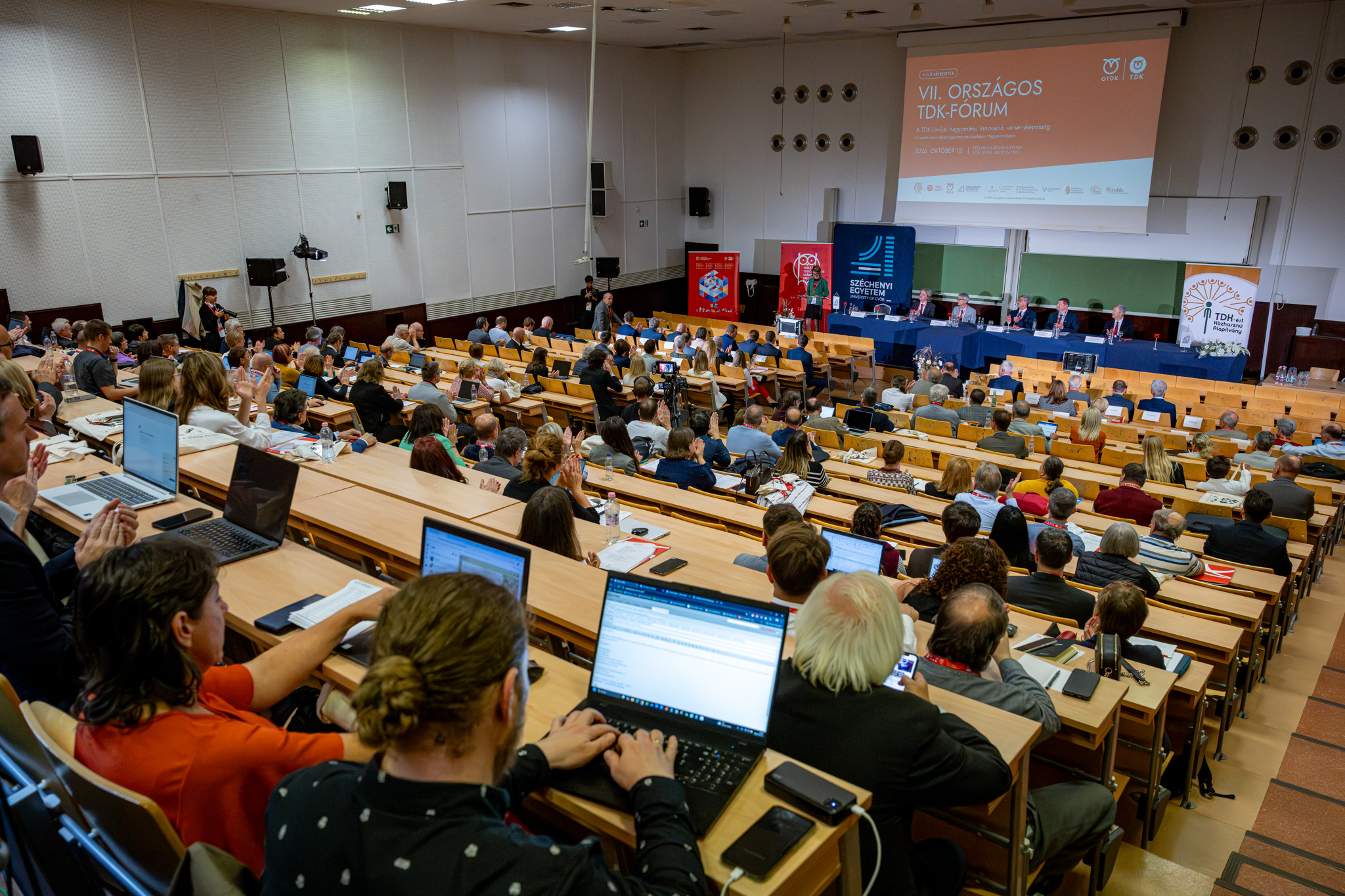
Széchenyi István University hosted the 7th National TDK Forum. (Photo: András Adorján)
This year’s theme, “The Future of Student Research: Tradition, Innovation and Competitiveness”, reflects how the movement continues to uphold its decades-long traditions while seeking answers to today’s challenges, from artificial intelligence to engaging Generation Z and Generation Alpha.
For more than 70 years, the student research movement has been one of the main pillars of talent development in Hungarian higher education. The Student Research Conference (TDK) provides opportunities to identify talented students, gain first-hand experience of independent academic research, develop a research mindset, and become part of the academic community while still at university.
As host, Rector Ferenc Friedler explained that Széchenyi István University’s primary aim is to prepare students for successful professional careers, and that its talent development system is designed with this goal in mind. He added that the Student Research Conference (TDK) plays a key role in this by giving young people the opportunity to present their research findings, which serves as a source of motivation.
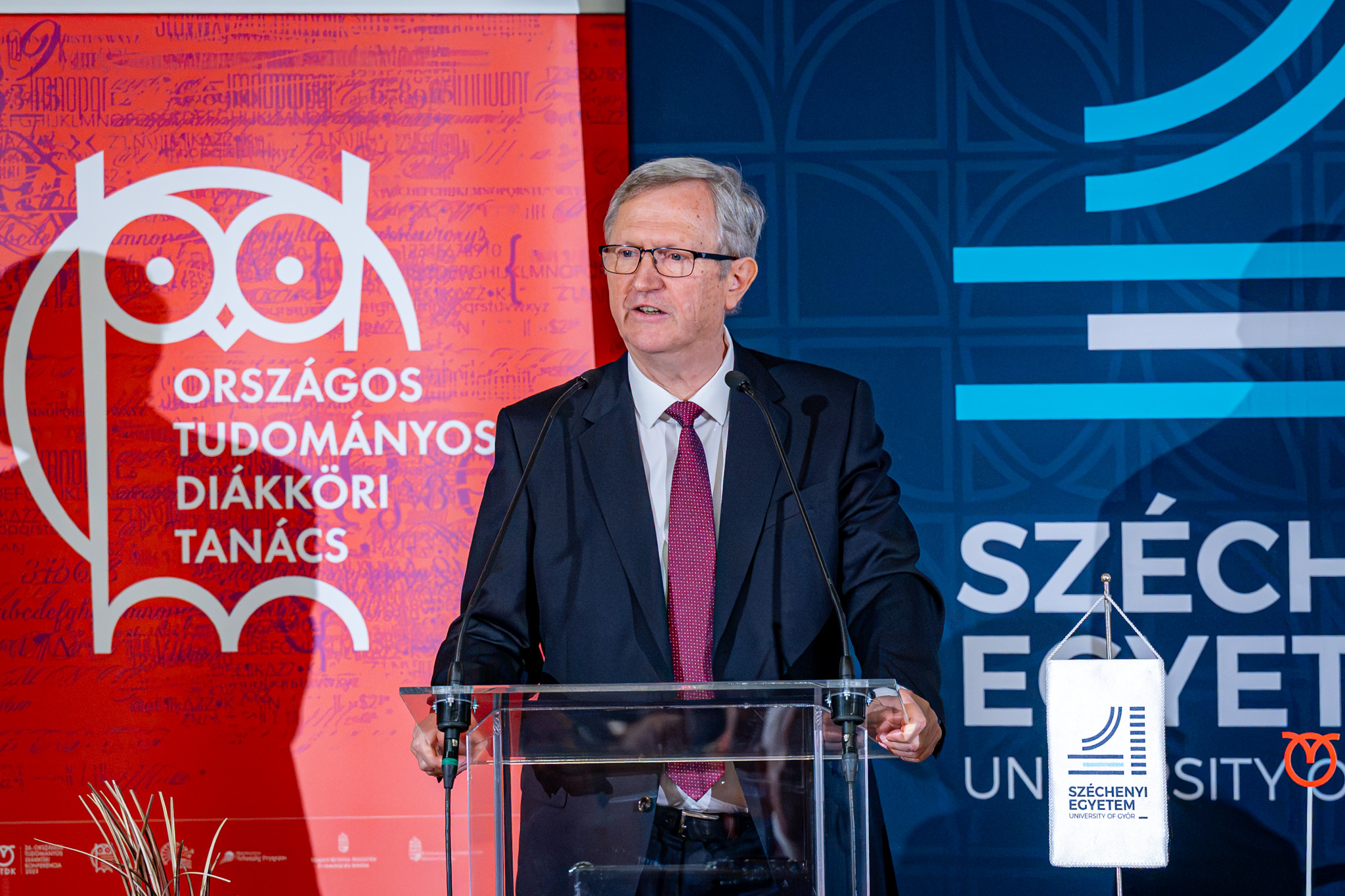
Professor Dr Ferenc Friedler, Rector and Vice-President for Scientific Affairs of Széchenyi István University
László Mátyus, President of the National Council of Students’ Research Societies (OTDT), highlighted the strength of the TDK movement as a community and the importance of cooperation between institutions, both of which are essential to successfully guiding talented students towards research careers.
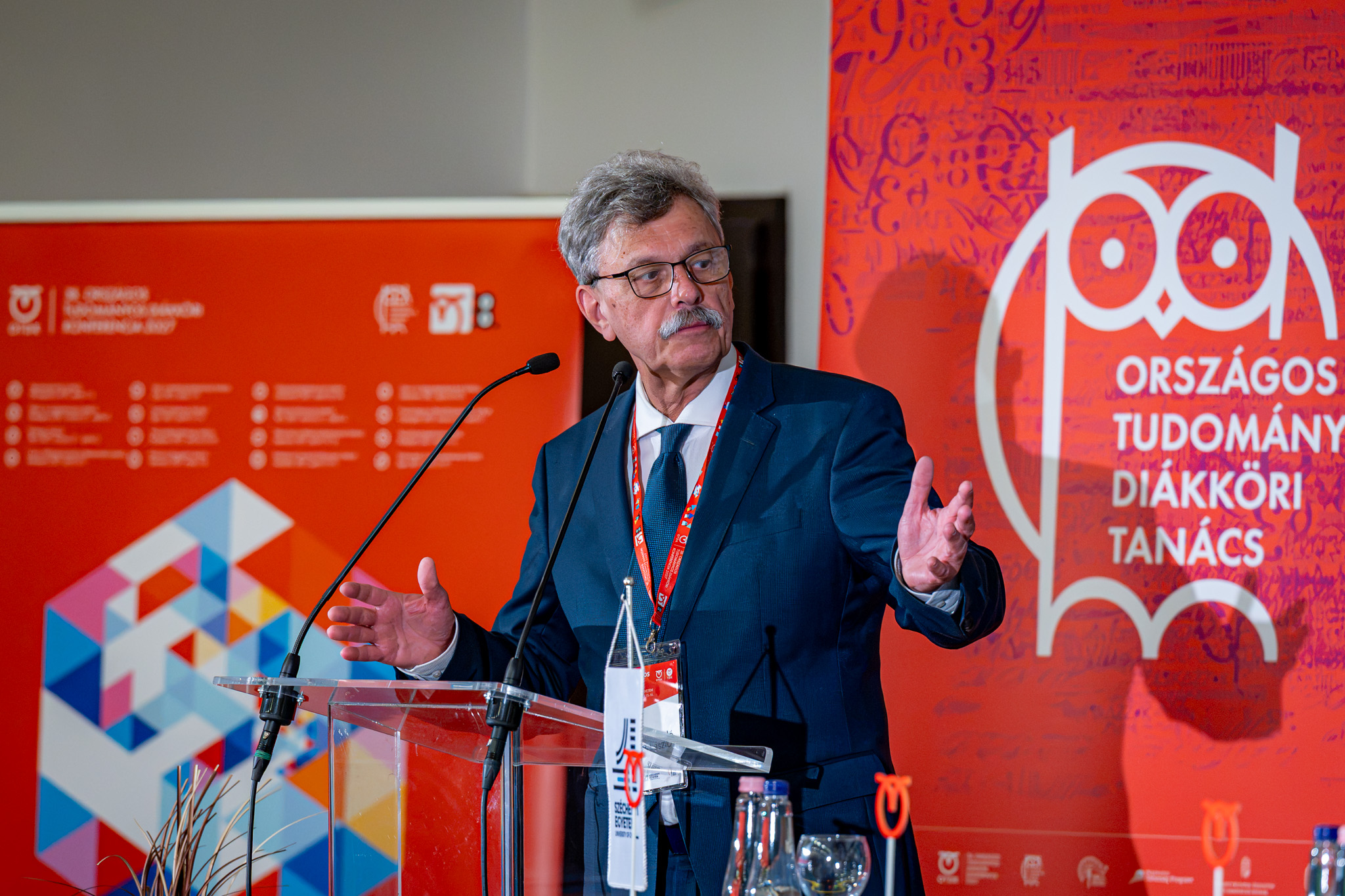
Prof dr László Mátyus, President of the National Council of Students’ Research Societies
In his presentation, Mihály Pósfai, President of the Hungarian Academy of Sciences (MTA), outlined the Academy’s commitment to supporting young researchers. He emphasised that supporting future generations of researchers is a long-term strategic priority for the Academy, with the Student Research Conference serving as one of the most important first steps on this path. He also discussed how the MTA’s scientific community can support student research through mentoring, professional recognition and the integration of talented students into research communities.
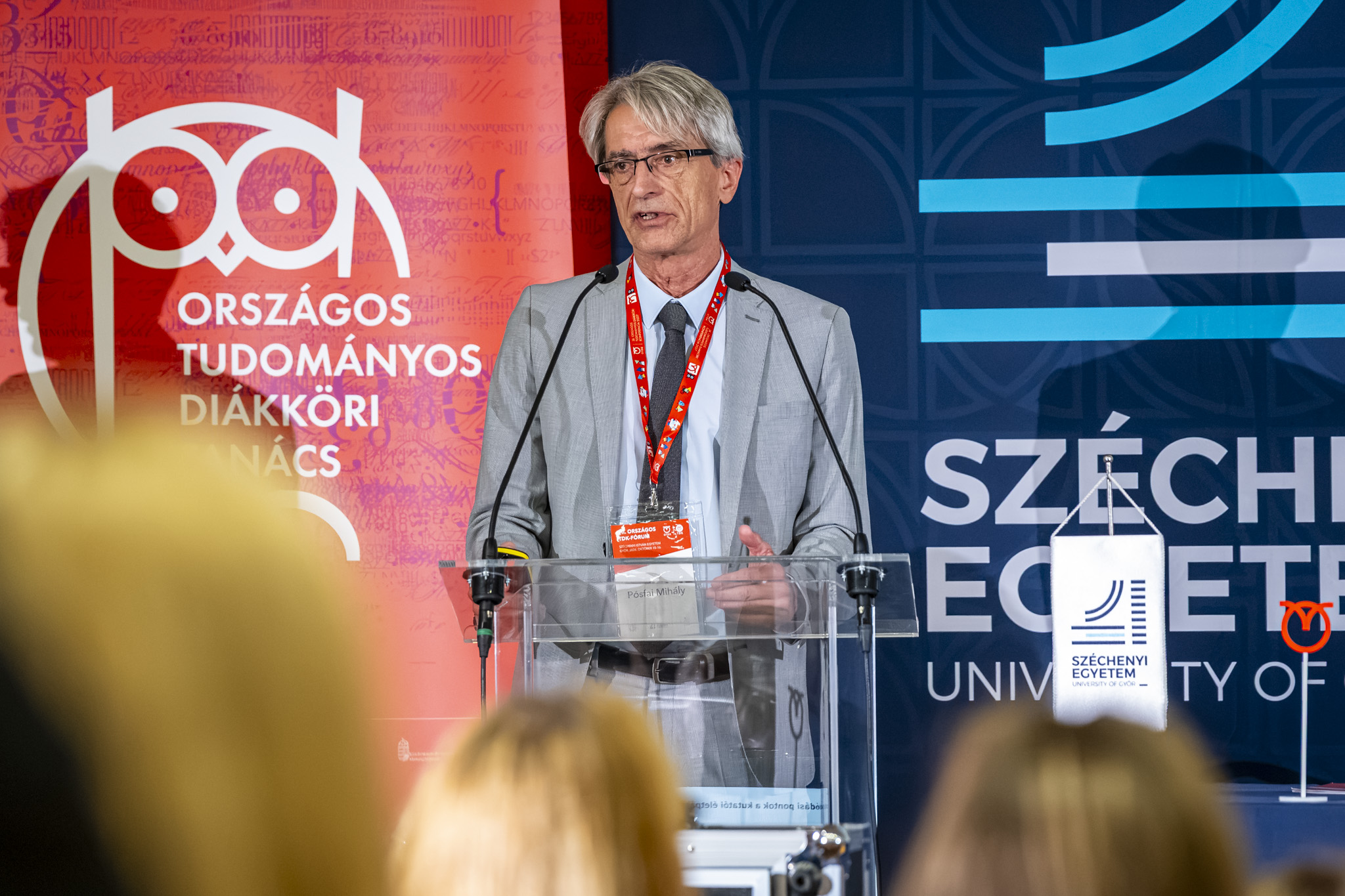
Prof dr Mihály Pósfai, President of the Hungarian Academy of Sciences
Péter Horváth, State Secretary for Science Policy and Innovation, stressed that ensuring a strong pipeline of young researchers is vital to Hungary’s scientific and economic competitiveness, as well as to societal well-being. The Student Research Conference movement plays a key role in this. The Ministry of Science and Technology aims to offer young researchers attractive career prospects and predictable funding in Hungary. To this end, it plans to gradually increase funding for scientific talent development from the National Research, Development and Innovation Fund (NKFI Fund) by 2030.
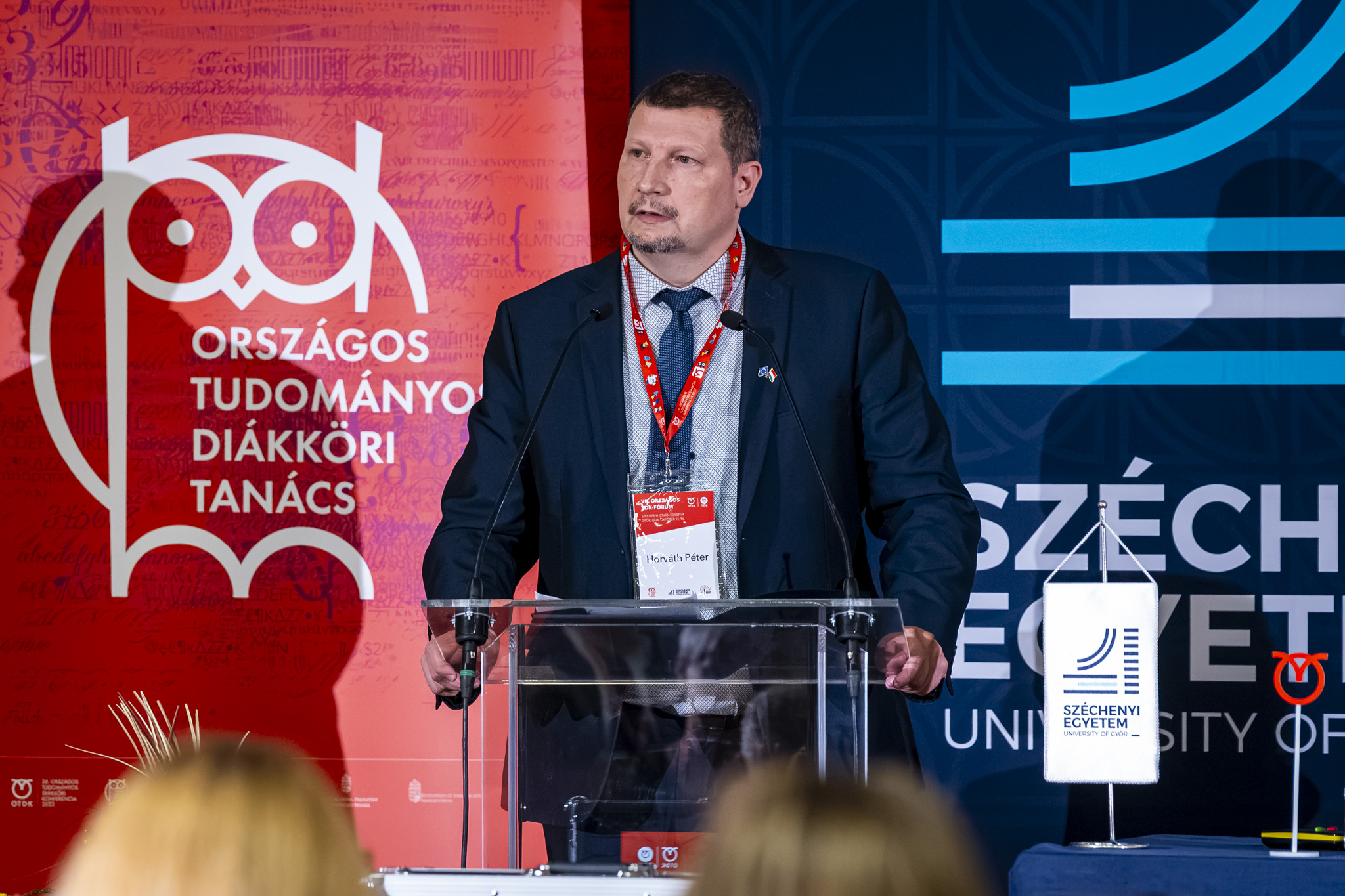
Dr Péter Horváth, State Secretary for Science Policy and Innovation
Sándor Katz, State Secretary for Higher Education, discussed the importance of student research from the perspective of higher education policy. He stressed that “the Student Research Conference is not merely an optional extra, but an integral part of high-quality higher education and the national talent strategy. It bridges the gap between theoretical knowledge and practice, individual achievement and the professional community, and opens up opportunities for future researchers.” He also pointed out that the Student Research Conference is a key element of high-quality university education, enabling students to engage in genuine research while pursuing their bachelor’s and master’s degrees, thereby laying the foundations for doctoral studies and their subsequent careers. He also discussed how higher education institutions could further integrate talent development into their programmes and the recognition of teaching staff’s work.
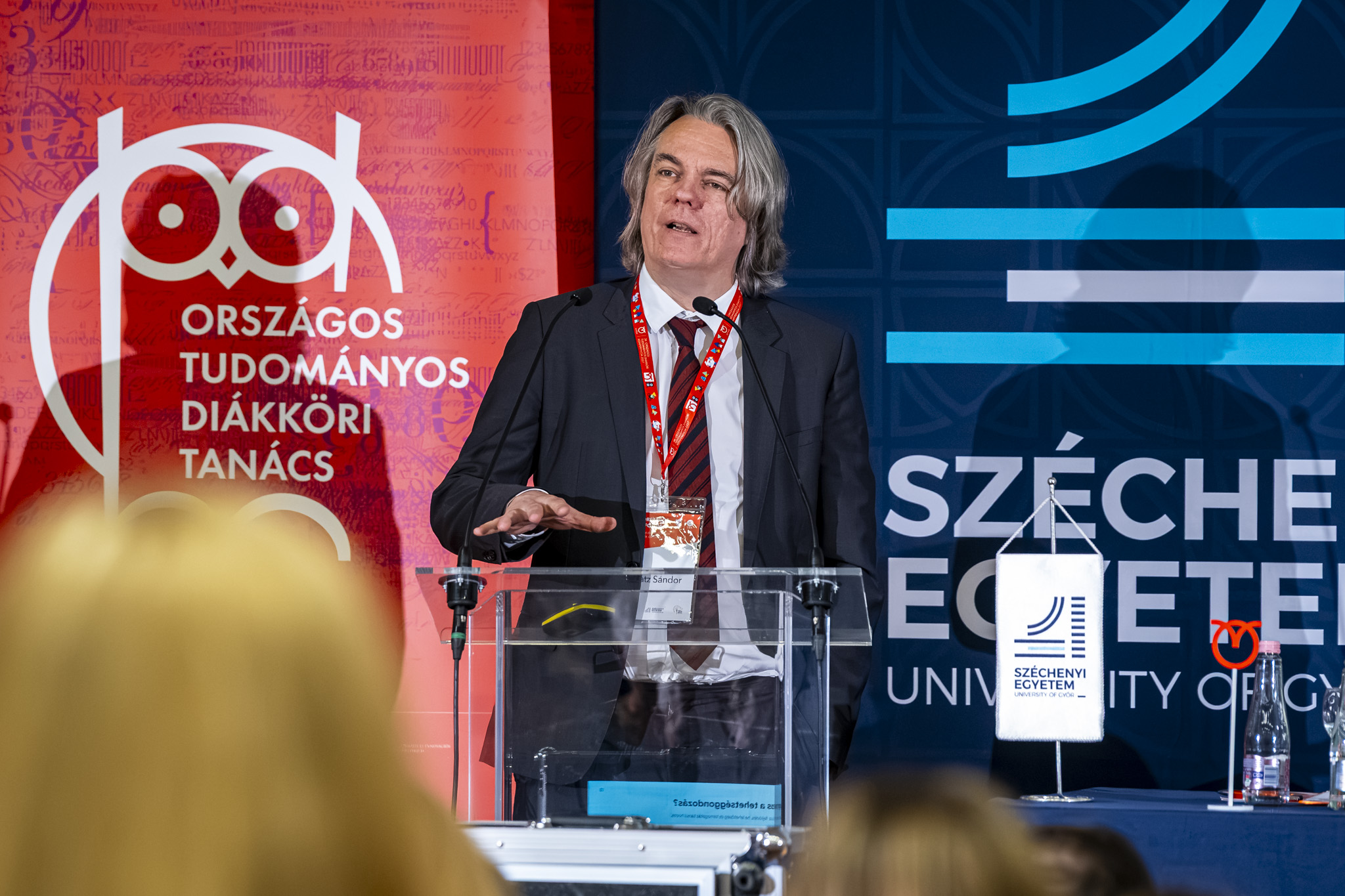
Prof Dr Sándor Katz, State Secretary for Higher Education
The roundtable discussion on nurturing scientific talent brought together representatives of organisations playing a prominent role in this field: Zoltán Benyó, President of the Hungarian Doctoral Council; Péter Horváth, State Secretary for Science Policy and Innovation at the Ministry of Science and Technology; Sándor Katz, State Secretary for Higher Education at the Ministry of Education and Children’s Affairs; László Mátyus, President of the National Council of Students’ Research Societies (OTDT); Mihály Pósfai, President of the Hungarian Academy of Sciences; and Péter Vámosi, President of the Association of Hungarian PhD and DLA Candidates. The discussion was moderated by István Szabó, Chief Strategic Adviser to the OTDT. The participants discussed successful talent development programmes in Hungary and areas where further progress is needed, and identified the key challenges that remain to be addressed.
This was followed by a roundtable discussion featuring university rectors and focusing on institutional practices in higher education. Drawing on their own institutions’ experiences, Zoltán Bács, Rector of the University of Debrecen; Lénárd Darázs, Rector of Eötvös Loránd University; Adrián Fábián, Rector of the University of Pécs; Ferenc Friedler, Rector of Széchenyi István University; Zita Horváth, Rector of the University of Miskolc; Márton Tonk, Rector of Sapientia Hungarian University of Transylvania; and Péter Szendrő, Honorary Lifetime President of the National Council of Students’ Research Societies (OTDT), explored how to ensure that student research groups (TDK workshops) remain a key pillar of talent development in higher education in the years to come. The discussion was moderated by Norbert Kis, Vice-President of the OTDT.
The professional committee meetings of the OTDT on the first day and the subject-area sessions on the second focused on specific challenges that could directly shape the future of student research societies (TDK). Participants discussed in detail a range of issues, including how artificial intelligence should be addressed within the TDK framework; the changing roles of written research papers and oral assessment; the place of TDK in research career pathways; the situation of TDK workshops; ways to reduce attrition at the National Student Research Conference (OTDK); the role of English and the participation of international students; and how to engage Generation Z and Generation Alpha. The handling of multidisciplinary topics and research papers was also among the key issues discussed.
In his closing remarks, László Mátyus, President of the OTDT, highlighted that the strength of the National Research Movement (TDK) lies both in its decades-long tradition and in its ability to continually renew itself. The student research movement must preserve its core values of individual mentoring, independent research and a strong scientific community, while also taking into account the circumstances and motivations of today’s students. The stakes extend far beyond the TDK itself: the quality of the next generation of researchers and the ability to retain talented individuals will fundamentally shape the future of Hungarian higher education, science and the economy.